Use the route below for planning, then open the linked sources for details that can change.
Choose a Jeju coast day or the Hapcheon period set
Official Korea Tourism Organization pages connect When Life Gives You Tangerines with Hallim Port and Seongsan Ilchulbong on Jeju, Borinara Hagwon Farm in Gochang, and Hapcheon Film Park in South Gyeongsang. These places are not one practical route. Hallim Port offers the strongest everyday Jeju connection, while Seongsan adds a major landscape stop on the opposite side of the island. Hapcheon is the managed set option for visitors interested in the production's period streets. Pick one region from the wider itinerary and save its Korean place names before arranging transport. Do not turn four distant citations into a rushed national checklist.
Use Hallim Port as the west Jeju anchor
KTO identifies Hallim Port as the harbor where Ae-sun and Gwan-sik meet their son after his fishing voyage. It is also a working harbor used by residents, crews, and vehicles, not a preserved drama set. Stay on public walkways, keep loading areas and boat access clear, and never step onto a vessel or working pier without permission. Pair the port with an ordinary west Jeju attraction that suits the day's weather and return route. Buildings, boats, and sightlines can change after filming, so use the official relationship to identify the place rather than promising the exact frame or an uninterrupted photo position.
Treat Seongsan and Gochang as separate alternatives
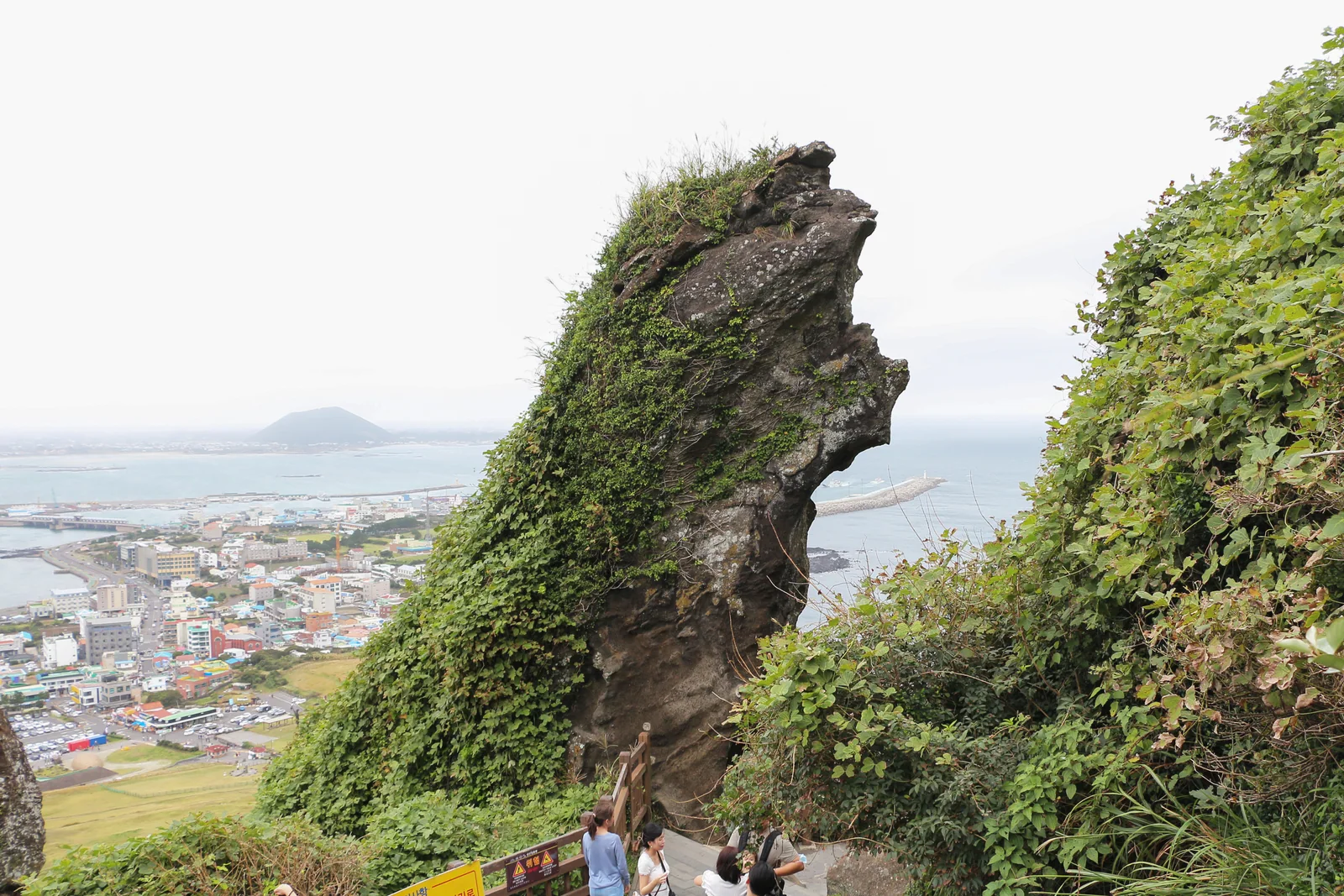
KTO labels Seongsan Ilchulbong as a filming location for the series and also links Borinara Hagwon Farm in Gochang with its flower-field scenes. Neither is a quick extension from Hallim. Seongsan belongs to an east Jeju day whose trail access, weather, and crowd conditions should be checked with the heritage operator. Borinara is a mainland seasonal farm whose crops and visitor areas change through the year. Do not promise canola, barley, buckwheat, or a remembered color outside the operator's current notice. Choose the alternative that already fits the trip rather than traveling solely to reproduce a temporary landscape.
Plan Hapcheon Film Park as its own regional visit
KTO's retro-location feature lists When Life Gives You Tangerines among productions made at Hapcheon Film Park. The attraction contains streets representing several modern periods and has hosted hundreds of works, so not every façade belongs to this series. Confirm the current public entrance, closed day, active filming restrictions, and accessible areas with the operator. Remain behind barriers and do not enter work zones or buildings that are shut. A visit is most useful when paired with a broader Hapcheon plan instead of being added to Jeju or Gochang. If production closes part of the set, enjoy the permitted interpretation without seeking a service entrance.
Let present-day Jeju life lead the visit
The drama's emotional connection to Jeju does not make fishing work, village homes, farmland, or private family spaces available to visitors. Keep scene context short and avoid dialogue, episode retellings, posters, stills, costumes, and copied production art. At the harbor, yield to workers. At a heritage or farm destination, follow current trails and crop boundaries. A licensed photograph of a real destination illustrates today's travel setting; it does not authorize copying a broadcast frame. When a fan pin conflicts with the public route or points to a residence, discard it. The guide should deepen a lawful regional trip without placing pressure on residents.
Reopen KTO and the chosen destination operator
Use KTO to establish the work-to-place relationships, then use Visit Jeju, the heritage authority, Borinara, or Hapcheon Film Park for present access. Recheck weather, trail limits, harbor conditions, seasonal crops, filming closures, photography rules, and the return connection shortly before travel. Static prices, hours, transport times, and flowering forecasts do not belong in this route without a reviewed visible fact. Select one region, keep a nearby non-drama fallback, and remove any stop whose lawful public boundary is unclear. This approach preserves the official evidence while acknowledging that a port, volcanic landscape, farm, and active film set operate for different purposes.