Use the route below for planning, then open the linked sources for details that can change.
Separate express and intercity service before searching
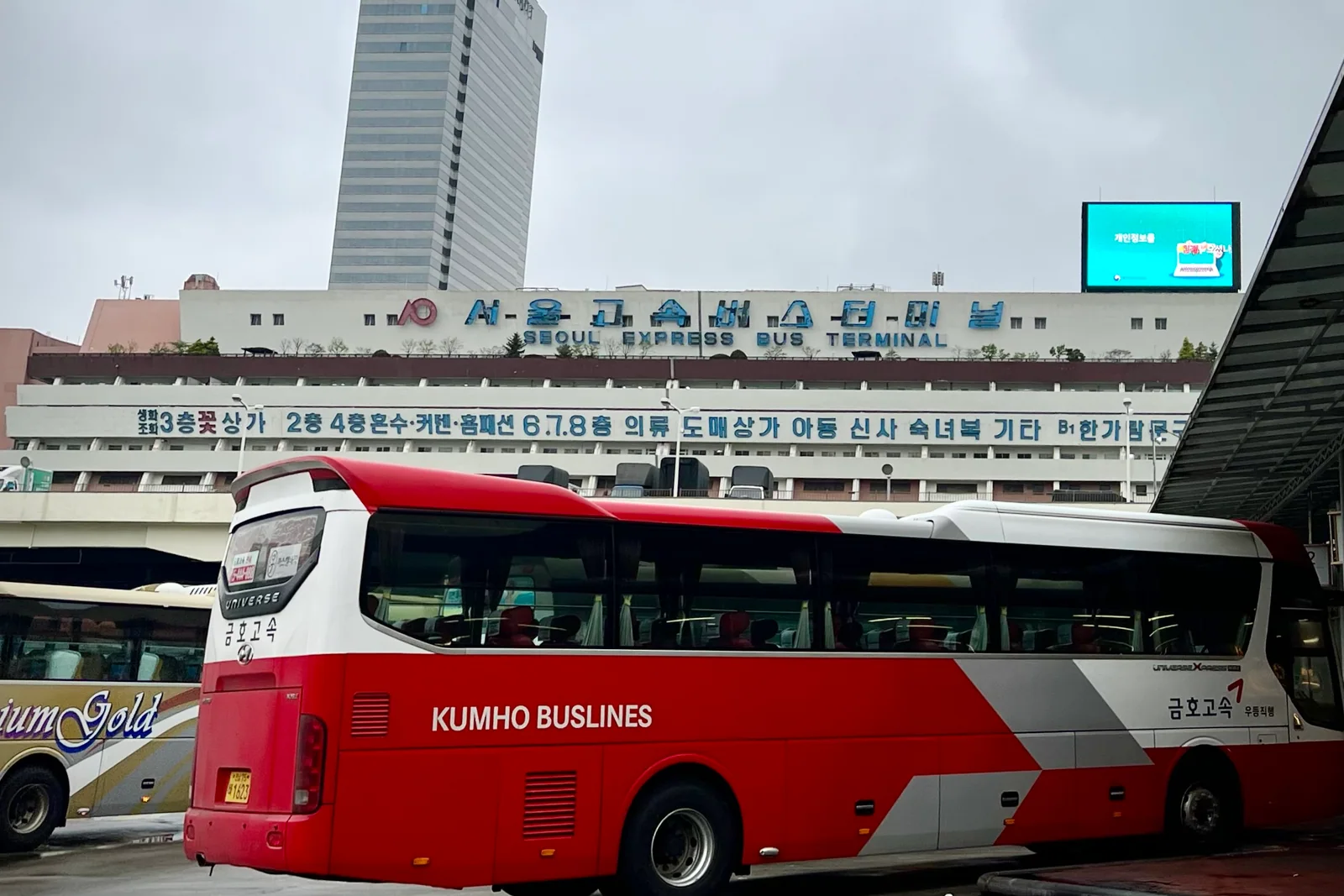
Korea's express and intercity coaches overlap in ordinary travel language but can use different reservation systems, terminals, and stop patterns. An express service often links major terminals on a defined corridor, while an intercity service may serve additional regional stops. The useful question is not which label sounds faster; it is which official system lists the exact origin and destination needed. Begin with the VISITKOREA operator overview, then continue to the appropriate official reservation service. Search both city and terminal names when comparing routes. A result for the right city can still be wrong when it departs across Seoul, arrives outside the intended district, or uses a terminal that leaves no practical final connection.
Confirm the terminal pair before choosing a seat
Write down the full departure terminal and arrival terminal, not just the cities. Compare each terminal with the hotel, attraction, airport, or rail station involved in the same day. Seoul has several major coach terminals, and regional cities can separate express and intercity operations. A route that appears convenient by travel duration may create a long surface transfer at one end. Check whether the listing is direct, whether it makes intermediate stops, and whether the final arrival supports the next leg. If two official systems show alternatives, compare complete door-to-door effort. Do not use a map pin or an old ticket photo as proof of the current terminal; verify the terminal name again on the issued reservation.
Check the current foreign-visitor payment path
Route search, seat selection, payment, and mobile boarding are separate capabilities. An English page may display a route even when its current payment channel has changed, and a resident-focused app may require local account verification. Check the current official reservation service before entering card details. Use only the payment options shown in the operator's live booking flow, and verify refund responsibility before purchase. Do not assume every overseas card, browser, or phone can complete every route. If payment fails, check whether a reservation exists before retrying. Keep an in-person terminal purchase as a legitimate fallback instead of sending readers toward an unofficial seller whose support and cancellation terms are unclear.
Preserve the evidence needed to board
After payment, confirm that the official system shows an issued reservation with the correct terminal pair, departure date, passenger count, coach, and seat. Save the reservation number, supported ticket or barcode, purchaser details, and the payment method needed for retrieval. A bank authorization or seat-selection screen does not by itself prove that boarding is available. Check whether the selected service accepts direct mobile boarding or requires collection at a terminal machine or counter. Arrive at the exact terminal and follow its operator displays, because different companies can use separate gates. Keep the ticket accessible until the journey ends and avoid posting a readable barcode or reservation number in public travel photos.
Plan baggage and the final regional connection
Coach travel can be efficient for regions that are awkward by rail, but the terminal is rarely the final destination. Confirm how the group will move from the arrival terminal to the accommodation or attraction and whether that local service is practical with luggage. Keep passports, medicine, electronics, valuables, and the boarding record with the traveler rather than in a luggage hold. Ask staff where a bag should be loaded and verify the destination before it leaves your sight. Avoid a tight connection to a flight, performance, or last local bus because road conditions and boarding procedures can vary. A regional station guide can still be useful when the terminal and rail hub share the same onward district.
Recheck the booking rules before paying
Official reservation channels, foreign-card support, account requirements, partner apps, routes, fares, and terminal assignments can change. Check the live route search and the operator's newest payment notice before entering card details. First identify whether the trip uses an express or intercity service, confirm both terminals, follow the operator's current purchase path, and make sure a boarding document was issued. Keep an in-person terminal purchase as a fallback, and check the terminal display on travel day even when the saved reservation remains valid.