Use the route below for planning, then open the linked sources for details that can change.
Build the Jeonju route around one deliberate meal
Jeonju Hanok Village, Nambu Market, and a bibimbap meal can form one coherent food day when they are treated as different layers. The village supplies the walkable cultural setting, the market provides flexible browsing, and bibimbap can serve as the substantial seated meal. Choose the meal before adding snacks and confirm whether luggage must be stored or delivered to accommodation. A rail day trip needs a firm return boundary; an overnight visitor can use a slower route but still benefits from one geographic direction. Save the official Hanok Village map, the Nambu Market food information, and the exact address of the intended meal area. Do not let a single restaurant name determine the entire regional journey. A nearby verified substitute should preserve the route when a queue, closure, or reservation issue appears.
Understand the bibimbap components before mixing
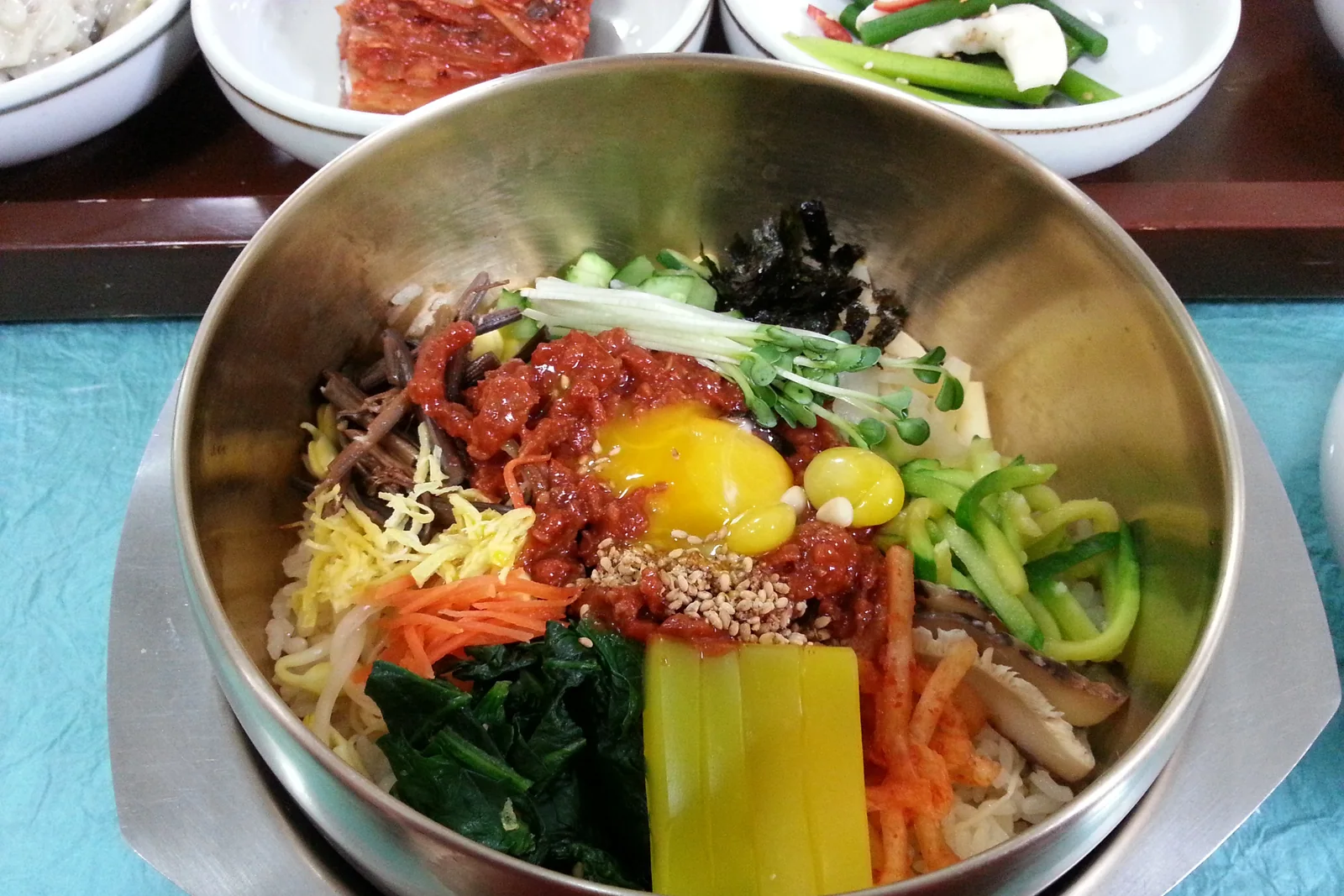
Bibimbap is assembled from rice, vegetables, seasoning, and toppings, but the ingredients, broth or side dishes, egg, meat, cooking method, and presentation vary by restaurant. Confirm the ordered version before assuming that visible vegetables make it vegetarian or that a topping can simply be removed. When served, identify sauces and accompaniments before mixing the bowl so a dietary concern can still be addressed. Add seasoning gradually; the intention is to taste the ingredients, not to reproduce a ratio seen in a video. Side dishes may contain seafood-based fermentation, meat stock, soy, sesame, wheat, or other allergens. Travelers with a strict requirement should ask about the complete set, not only the main bowl. If staff cannot confirm a critical ingredient, choose another clearly described meal rather than testing the uncertainty through taste.
Use Nambu Market as a selective tasting zone
Nambu Market belongs in the route as a place to compare Jeonju food traditions and current market activity, not as a command to buy from every aisle. Check the official visitor information, walk one section before ordering, and choose items that add contrast to the seated meal. Share portions only after confirming fillings, sauces, and cross-contact needs for everyone involved. Keep entrances, working aisles, and resident shopping paths clear. Market programs and individual sellers can change by day, season, and notice, so a blog's stall sequence is not a live directory. When the market is crowded, the weather is difficult, or the group is already full, shorten the visit and continue through the public village route. The market remains valuable context even when the best decision is to observe rather than purchase.
Treat Hanok Village snacks as optional route pauses
The Hanok Village contains food businesses alongside cultural sites, accommodation, workshops, and ordinary streets. Place any snack where the walking route naturally needs a rest rather than zigzagging between saved photos. Confirm that food is permitted in the immediate area, use the seller's disposal guidance, and avoid eating inside heritage or private spaces without permission. A traditional-looking package or storefront does not establish local origin, current ingredients, or suitability for a dietary requirement. Read labels and ask before purchase. Choose one portable item at most until the main meal is complete, then reassess appetite. This pacing leaves room to understand the village beyond food and prevents a return walk with uncovered dishes, sticky packaging, or more purchases than the group can carry safely.
Protect dietary needs, payment backup, and the station return
Vegetarian, vegan, halal, kosher, allergy-sensitive, and medically restricted travelers should communicate requirements at each business because recipes and shared kitchens differ. Fermented vegetables, sauces, broths, dumplings, pancakes, and side dishes can contain seafood, meat, egg, wheat, soy, or sesame even when the main visible ingredient appears compatible. A tourism listing is not certification. Payment acceptance also varies between restaurants, market stalls, and small shops, so keep a backup and confirm the total before completing the transaction. Day visitors should work backward from the confirmed KORAIL journey, allowing for luggage retrieval and the local trip back to Jeonju Station. Remove a snack before compressing that connection. Missing the return train is a larger failure than leaving one market item untasted.
Use separate official sources for food, village, and transport
Use the official Jeonju bibimbap information for dish context, the Nambu Market food page for the market layer, and the Hanok Village source for public visitor guidance. KORAIL and the existing Jeonju Station guide remain the authorities for the rail and local-arrival sequence. Individual restaurants and stalls control their current menus, ingredients, reservations, operating status, and payment methods. This page therefore does not publish a restaurant ranking, fixed price, business hour, guaranteed market program, or permanent snack list. Recheck the selected meal and market conditions on the visit date. A practical Jeonju food route is one substantial meal, one selective market pass, one coherent village walk, explicit dietary questions, and a protected journey back to the station or accommodation.