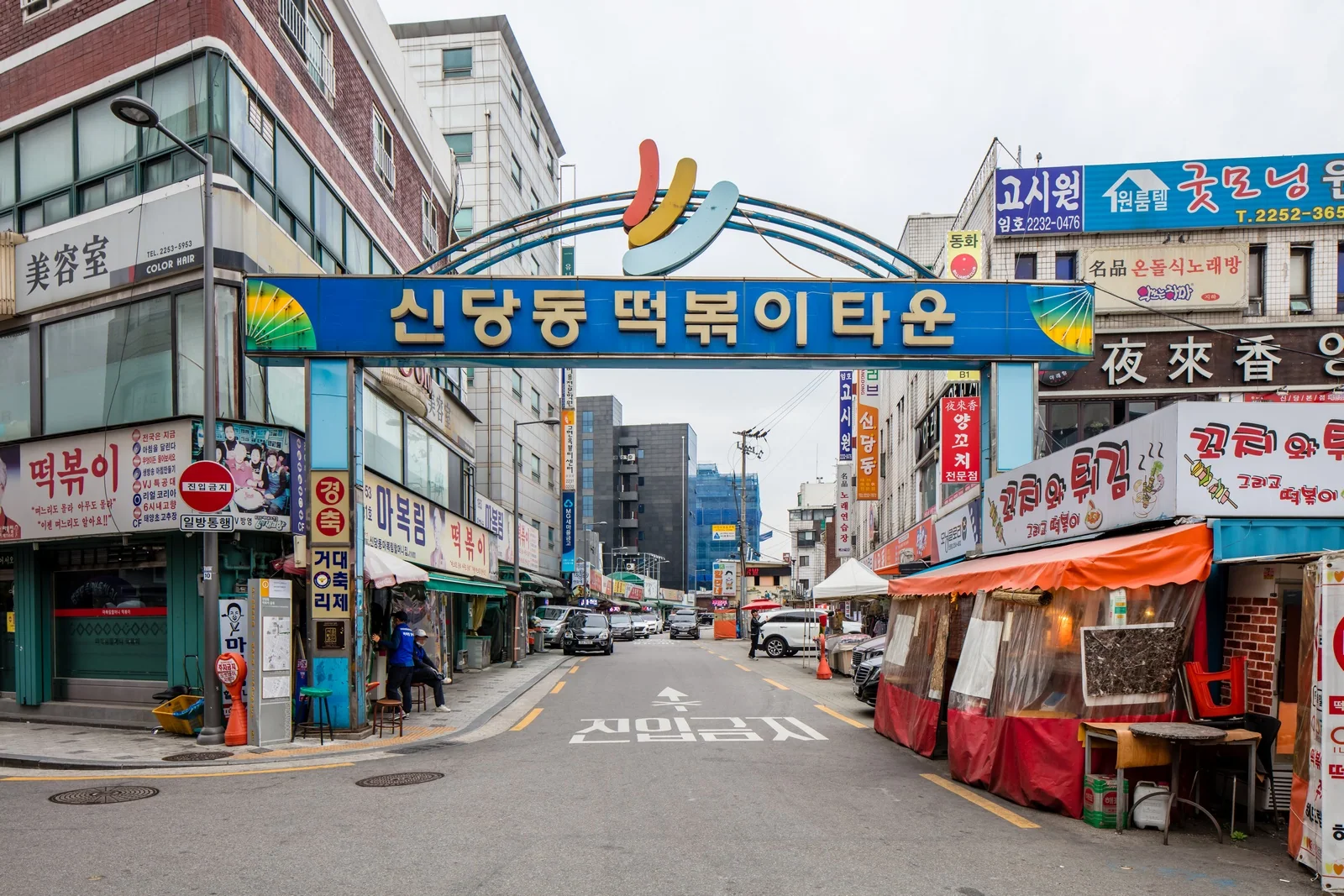
Use the route below for planning, then open the linked sources for details that can change.
Understand jeukseok tteokbokki before choosing a table
Sindang is associated with jeukseok tteokbokki, a meal cooked in a pan at the table rather than a small cup handed over as a street snack. That distinction changes the planning: portions are often designed for sharing, the meal takes attention while it cooks, and noodles, dumplings, fish cake, egg, or other additions can make the pan much larger than expected. Begin at the official tteokbokki-town area, read the current menu outside where possible, and choose a restaurant by clear communication and suitability rather than by a claim that one shop defines the entire street. The neighborhood tradition is stable enough to anchor the guide; individual recipes, staff, queues, and operating patterns remain business-level details that require current confirmation.
Order the base portion before stacking add-ons
Tell staff the party size and ask what the base order already contains. Rice cakes, sauce, vegetables, fish cake, noodles, dumplings, or boiled egg may be bundled differently, so a familiar menu photo is not reliable evidence. Choose the least complicated base that meets the group's appetite, then add one preferred texture rather than every available topping. Ramyeon absorbs sauce and thickens the pan, while dumplings and fried items add volume quickly. Fried rice can be a final step only if the group is still hungry and the restaurant offers it; it should not be treated as an automatic entitlement. This staged approach reduces waste and lets travelers understand the dish instead of turning the table into an oversized social-media order.
Manage sauce intensity and the hot tabletop pan
Ask about the available spice level before cooking begins, but remember that individual tolerance and restaurant recipes differ. Cheese, extra noodles, or sweetness do not reliably make a very spicy sauce suitable for everyone. Keep children and loose sleeves away from the burner, pan, and handles, and let staff explain when to stir or reduce the heat. Steam and sauce can splash as the mixture thickens. Use the provided utensils rather than reaching across the flame, and do not move the cooking equipment. If someone cannot tolerate spice, arrange a separate meal rather than expecting the shared pan to serve contradictory needs. A nearby café or unhurried walk can follow the meal, but the route should not depend on a specific dessert business remaining open.
Check fish cake, broth, noodles, sauces, and cooking wine
Tteokbokki's rice cakes and red color do not make the complete pan vegetarian, vegan, halal, or gluten-free. Fish cake and seafood-based stock are common concerns; sauce can include soy, wheat, or other seasonings; ramyeon and dumplings add wheat and possible egg or meat; cheese adds dairy; some recipes may use cooking alcohol. Shared cookware and preparation surfaces create additional cross-contact. Ask about the whole base sauce and broth before discussing removable toppings. A pork-free answer does not establish halal status, and leaving fish cake on the side does not remove stock already in the pan. When a restriction is critical, use an establishment that can explain and accommodate it rather than assuming the neighborhood's signature dish can always be modified safely.
Repeat the final order and agree on payment
Because base portions and add-ons can appear on separate menu lines, repeat the complete order before the burner is lit. Confirm how many portions, which noodles or dumplings, and whether drinks or a later rice course are included. Ask how the restaurant accepts payment; cards are common in Korea, but merchant equipment, foreign-card support, and mobile wallets are not universal guarantees. Carry a modest cash fallback and never rely on a transit card unless the merchant specifically accepts it. Avoid fixed-price advice from old posts because recipes, serving sizes, and business policies can change. If sharing costs, one person should complete the merchant payment and the group can settle privately afterward, reducing confusion at a busy counter.
Recheck the street, then preserve the ordering method
Use the official Sindang and Korea tteokbokki sources to confirm the current location context, then check the chosen business directly for access and operation. A restaurant named in an older tourism feature may change hours, close, move, or alter its menu while Tteokbokki Town remains a valid district. The guide's evergreen value is the method: understand that this is a shared table meal, identify the base contents, add toppings gradually, control spice, protect the group around the burner, verify dietary requirements, and confirm payment. Travelers dining alone should ask whether an individual order is available instead of assuming it; groups should avoid ordering for an imagined minimum until staff explains the actual policy.