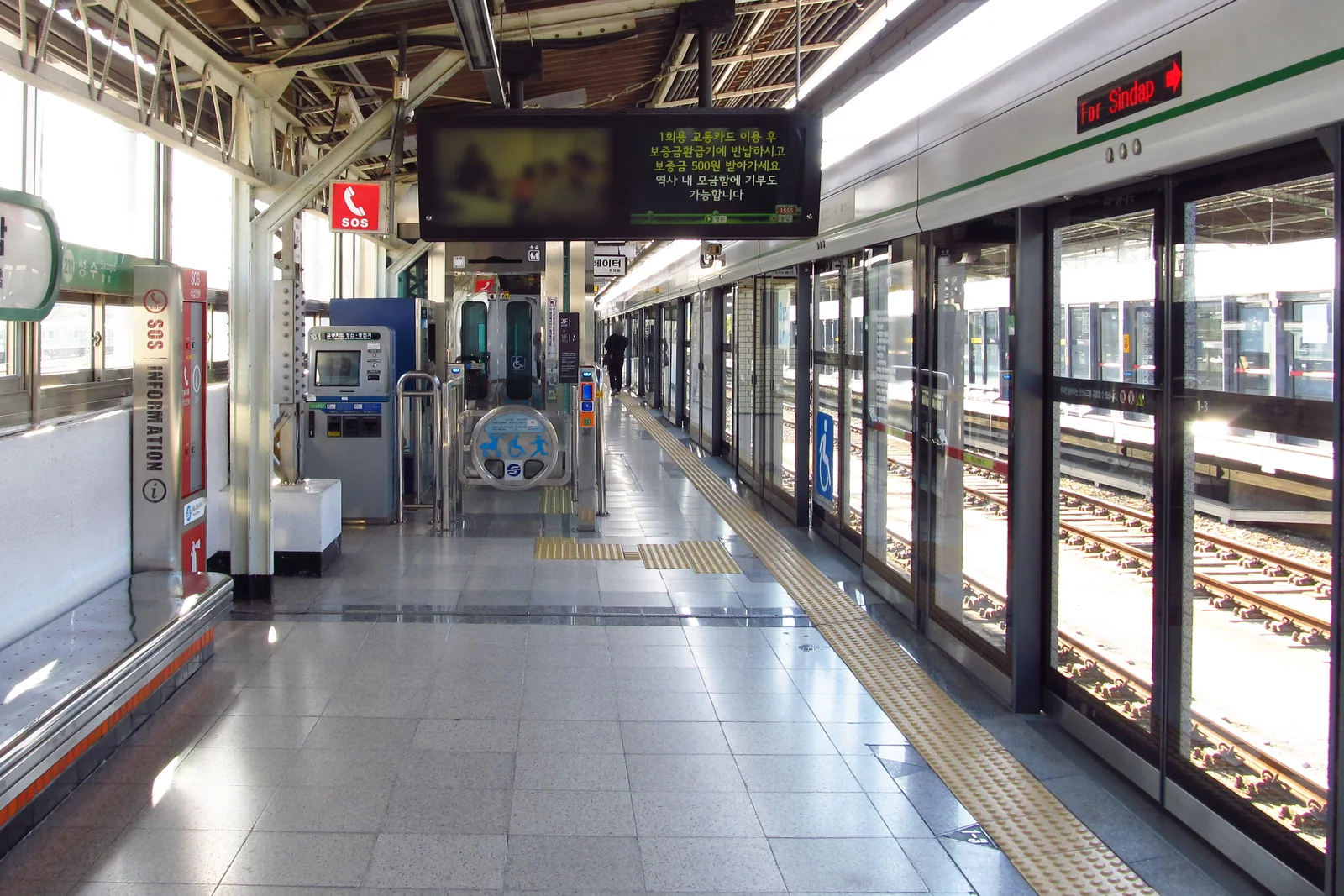
Use the route below for planning, then open the linked sources for details that can change.
Plan accessibility for the specific traveler and day
An accessible Seoul route must start with the person's real mobility, sensory, communication, fatigue, equipment, and assistance needs. A station marked accessible in general may still contain a long transfer, an unsuitable street exit, or equipment temporarily out of service. Use Seoul Metro as the official source for current station facilities, then verify each critical segment close to travel. Ask what happens if the preferred elevator, boarding point, or street path is unavailable. The goal is not to label an entire network easy or difficult; it is to create a door-to-door chain whose individual links and fallbacks match one traveler.
Audit every station and transfer as a separate link
Record the boarding station, interchange stations, destination exit, and the surface route after the exit. For each one, check current elevator or lift information, step-free continuity, platform changes, transfer distance, and how assistance is requested when needed. A route with fewer rail stops can be harder if it includes a complex interchange or an inaccessible curb at the end. Avoid extrapolating from a different exit in the same station. Save the station and exit names in Korean and keep the official facility page accessible. When the chain contains an unverified link, treat it as a planning gap rather than silently assuming continuity.
Compare effort, exposure, and recovery options
Evaluate routes by transfers, crowd density, walking distance, slopes, surface crossings, weather exposure, seating opportunities, and access to help, not by the fastest estimate alone. A longer ride with a simpler transfer may be more reliable. Consider whether a mobility device and companion can board together and whether the destination has an appropriate entrance. Build rest and restroom needs into the route without assuming a particular facility is open. If travel occurs during a major event or difficult weather, simplify the day. Accessibility is part of the itinerary's structure, not an extra note added after attractions and reservations have already been fixed.
Prepare information that can be shown quickly
Carry the destination, accommodation address, relevant station and exit names, accessibility need, and emergency contact method in a format the traveler can access offline. Add Korean text where it helps staff understand the route or equipment question. Keep medication, device supplies, charging, and necessary documentation with the traveler. If assistance is arranged, record who provides it and where the meeting occurs rather than relying on a vague promise. Companions should know the fallback and should not separate from essential equipment. This small information kit reduces the cognitive load of explaining a need in a noisy station or during an unexpected reroute.
Design a fallback that changes the transport category
A backup consisting of another entrance to the same unavailable elevator is not enough. Identify an alternative station, accessible bus or vehicle path, or a decision to postpone the stop, depending on the traveler's needs and current official information. Save the Korean destination address for a driver and confirm that the vehicle can accommodate the traveler and equipment. Set a clear trigger for switching plans, such as an operator notice or a facility failure, before fatigue becomes severe. Keep optional attractions removable and protect access to the accommodation. A dignified fallback prioritizes safety and autonomy over completing a sightseeing checklist.
Reconfirm critical facilities with Seoul Metro
Use Seoul Metro for current subway facilities and service information, and contact the relevant venue or transport operator for needs outside its responsibility. Recheck critical stations shortly before travel and again when a disruption appears. Ask for direct confirmation when a particular elevator, boarding arrangement, or assistance process is essential. An exit, lift, or transfer that worked on an earlier trip may be unavailable today. Define the traveler's needs, check every link in the route, compare effort as well as time, carry a clear way to communicate those needs, and prepare a genuinely different fallback.