Use the route below for planning, then open the linked sources for details that can change.
Keep every event decision rooted in Busan
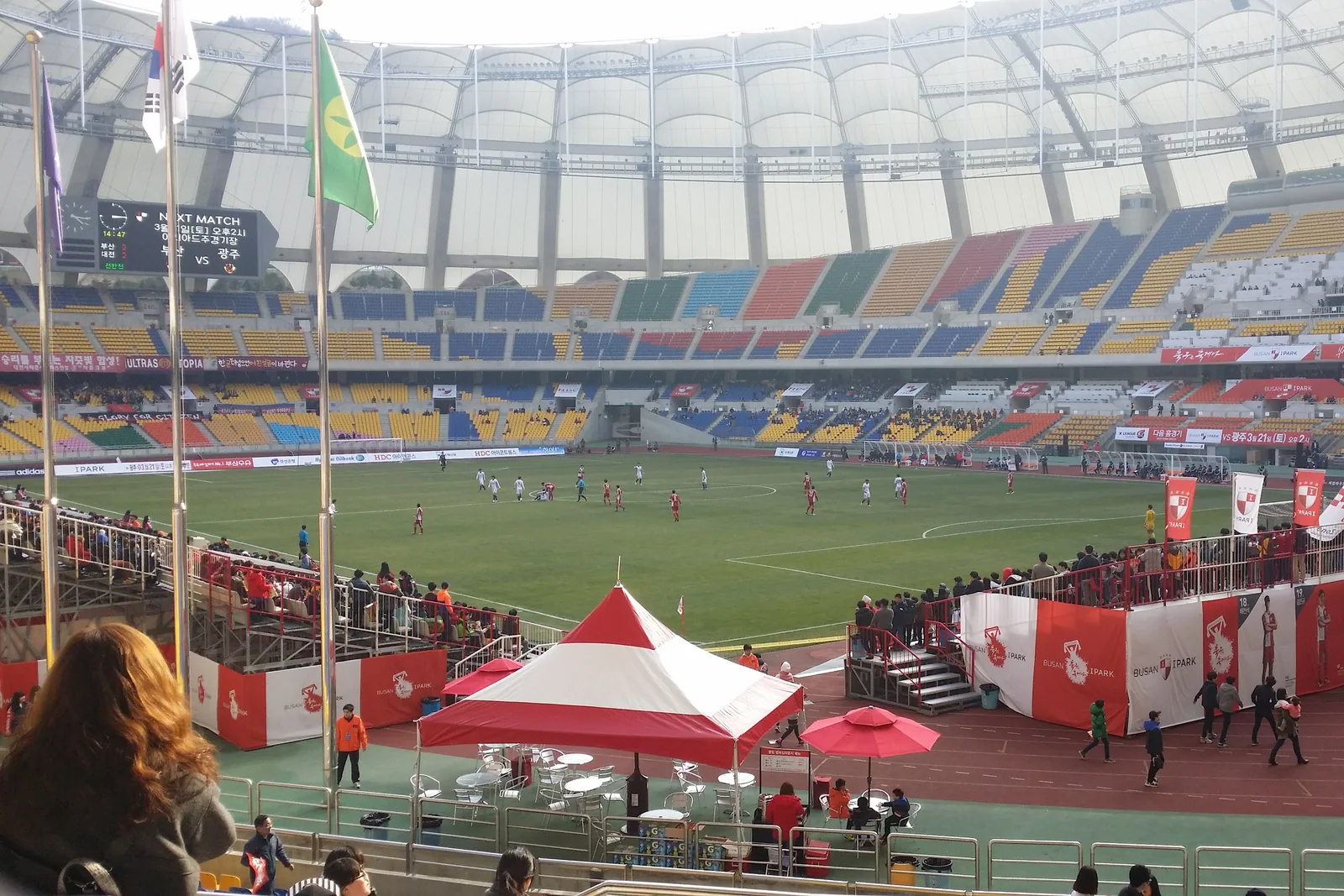
Busan Asiad Main Stadium requires a Busan city plan, not a Seoul concert routine with place names replaced. Save the exact event, stadium name in Korean, organizer, ticket channel, and current entrance notice. Use Busan transport information for the local journey and the event organizer for admission. Busan Station is only an intercity gateway for travelers arriving by rail; it is not the stadium's local destination. Identify the accommodation district and decide whether the event occurs on an arrival day, a departure day, or a settled city day. That context controls luggage, margin, and the safest post-event direction.
Verify the stadium configuration for this event
A main stadium can use different gates, seating zones, security layouts, and prohibited-item rules for each production. Read the organizer's current notice and keep ticket evidence, purchaser details, and the requested identity document accessible. Do not infer admission from a previous match, concert, or event in Seoul. If collection, wristbands, or verification occur before audience entry, record those as separate tasks. Check weather measures and permitted protective items together. The local transport operator can explain its services, but it does not control ticket eligibility; similarly, a venue map cannot resolve a seller-name question. Keep those responsibilities separate.
Route from the actual accommodation district
Build the local journey from the precise Busan address rather than starting every plan at Busan Station. Compare transfers, final walking distance, hills or crossings, weather, mobility needs, and crowd diversions using current Busan transport guidance. Save the stadium and return destination in Korean. Companions arriving separately should agree on a concrete outdoor rendezvous away from admission queues and share its pin in advance. If an intercity train is part of the day, leave enough separation between rail uncertainty and the first event obligation. Carrying luggage to the stadium should never be the default solution to a tight arrival or departure sequence.
Protect entry readiness from weather and baggage
Check the forecast, venue conditions, and current prohibited-item notice before choosing what to carry. Do not assume that large umbrellas, bottles, luggage, or seat accessories are accepted, and do not count on storage without direct confirmation. Keep identification, medicine, essential weather protection, and a charging method accessible. Plan food near the natural route and confirm critical dietary needs with the business. Optional sightseeing should be removable if intercity arrival, traffic, or organizer processing takes longer than expected. The fixed priority is completing the first required event step calmly, not maximizing the number of Busan stops before admission.
Design the return around the Busan endpoint
Choose a primary and fallback return that end at the real accommodation, intercity terminal, or other confirmed Busan destination. Do not rely on a static last-service claim. Event crowd controls can alter station access or pedestrian routes, and an intercity departure adds another non-negotiable checkpoint. Agree on an outdoor reunion point if the group is separated and preserve phone battery for navigation. If using a vehicle, verify the designated pickup area rather than requesting an ambiguous stadium gate. A traveler continuing to Busan Station should confirm the complete local connection; the station name alone does not create a safe departure margin.
Check Busan and event notices on the day
Reopen the Busan Transportation Corporation information for the city leg, the organizer for admission, and the relevant official venue or tourism guidance for destination context. Confirm the stadium identity, entrance process, ticket evidence, restricted belongings, accessibility support, weather response, and post-event crowd instructions. VISITKOREA is useful for broad trip planning but should not replace a live local operator or organizer notice. We leave out Seoul assumptions and omits volatile fares, schedules, bag measurements, and gate assignments. Its practical method connects the event to the traveler's actual Busan district, resolves luggage early, and protects both admission and the return.