Use the route below for planning, then open the linked sources for details that can change.
Choose one Our Blues cluster on Jeju
KTO's official course names Goseong Fifth-day Market, Geumneung Beach, and Gapado among Our Blues locations, and a newer feature adds Biyangdo and Jeju Batdam Theme Park. These anchors reflect different parts of the island and different visitor conditions. Goseong works with an east Jeju day, while Geumneung, Biyangdo, and Hallim form a western cluster; Gapado requires a separate ferry plan from Moseulpo. Do not compress a 100-kilometer official course into a single checklist. Choose the cluster that suits accommodation, weather, market date, ferry reliability, and the return margin, then give it time to function as a real Jeju visit.
Use Goseong market only on its current market day
KTO identifies Goseong Fifth-day Market as the place where several characters sold vegetables. It remains a local market serving residents rather than a permanent production exhibit. Check the current market calendar with an official source, arrive as an ordinary customer, keep aisles clear, and ask before photographing vendors or goods closely. Do not promise that a stall, sign, or person from filming remains. When the market is not operating, use a nearby public east Jeju attraction instead of searching residential streets for another scene. Fixed dates, hours, and prices can change and should be verified immediately before the planned visit.
Link Geumneung with a carefully planned island option
The official course connects Geumneung Beach with the developing relationship between Yeong-ok and Jeong-joon. KTO also identifies Biyangdo near Hallim as a principal village filming area. The beach can anchor a west Jeju day, while Biyangdo requires a lawful ferry and enough time for the return. Check sea conditions, sailing status, beach safety, and daylight through current operators. Never board a fishing boat or assume a private village space is part of the visitor route. If marine conditions are uncertain, keep the public beach and Batdam interpretation as alternatives rather than risking the last island connection.
Give Gapado a separate ferry decision
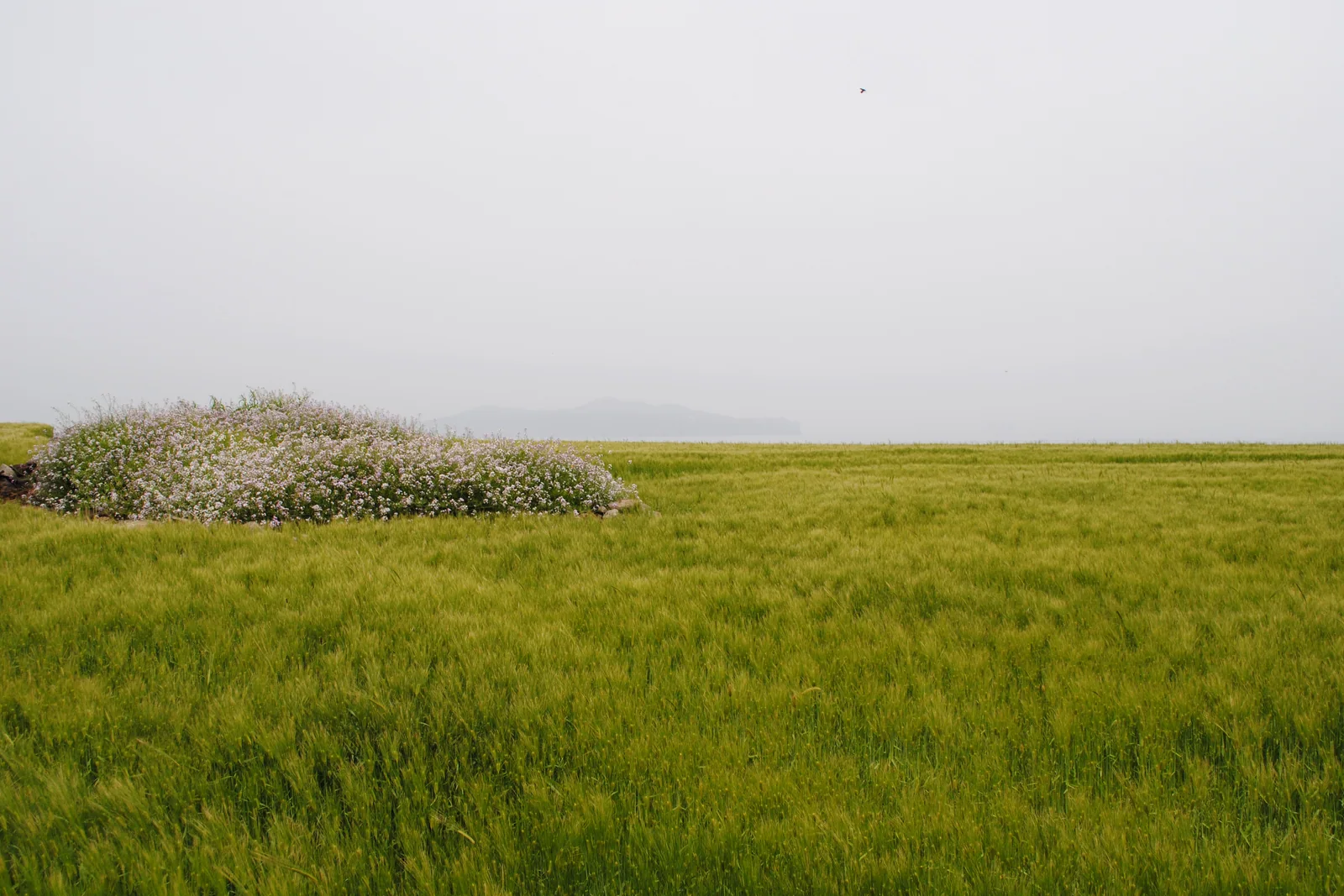
KTO names Gapado as the island where two characters spent time by bicycle. Reaching it depends on current sailings, weather, capacity, and the operator's boarding process. Confirm the departure port and return sailing before leaving the mainland side of Jeju, and do not rely on an old claim about frequency or crossing time. On the island, follow public roads, yield to residents and service vehicles, and keep fields and homes private. Seasonal barley is not guaranteed outside the current crop cycle. If the return margin is weak, skip Gapado and use a west-coast route that does not depend on a boat.
Respect the work and homes behind the scenery
Our Blues depicts markets, ports, farms, diving, and village relationships, but those activities belong to real communities. Do not approach working haenyeo, boats, market staff, homes, or drying areas as if they were a set. Brief scene context is enough; exclude dialogue, long character summaries, stills, and posters. Photograph broad public landscapes under current rules and avoid identifiable residents without consent. A Commons image of Gapado or another real place illustrates the destination, not the protected production. The page should help a traveler choose a responsible island plan that retains value even if no recognizable prop, sign, vehicle, or storefront survives.
Reopen KTO, ferry, market, and beach notices
Use KTO's course and destination features to establish the filming relationships. Use Visit Jeju, ferry operators, market authorities, and beach safety notices for current conditions. Recheck the market calendar, sailing status, weather, swimming boundary, bicycle access, and return connection close to travel. Do not recommend fixed fares, timetables, or crop forecasts without registered and approved visible facts. Choose one cluster and prepare a same-area fallback that does not depend on filming. When a ferry is cancelled or a market is closed, adjust the day rather than substituting a fan pin. This preserves both evidence quality and the ordinary life of Jeju communities.