Use the route below for planning, then open the linked sources for details that can change.
Set a two-part plan before entering Myeongdong
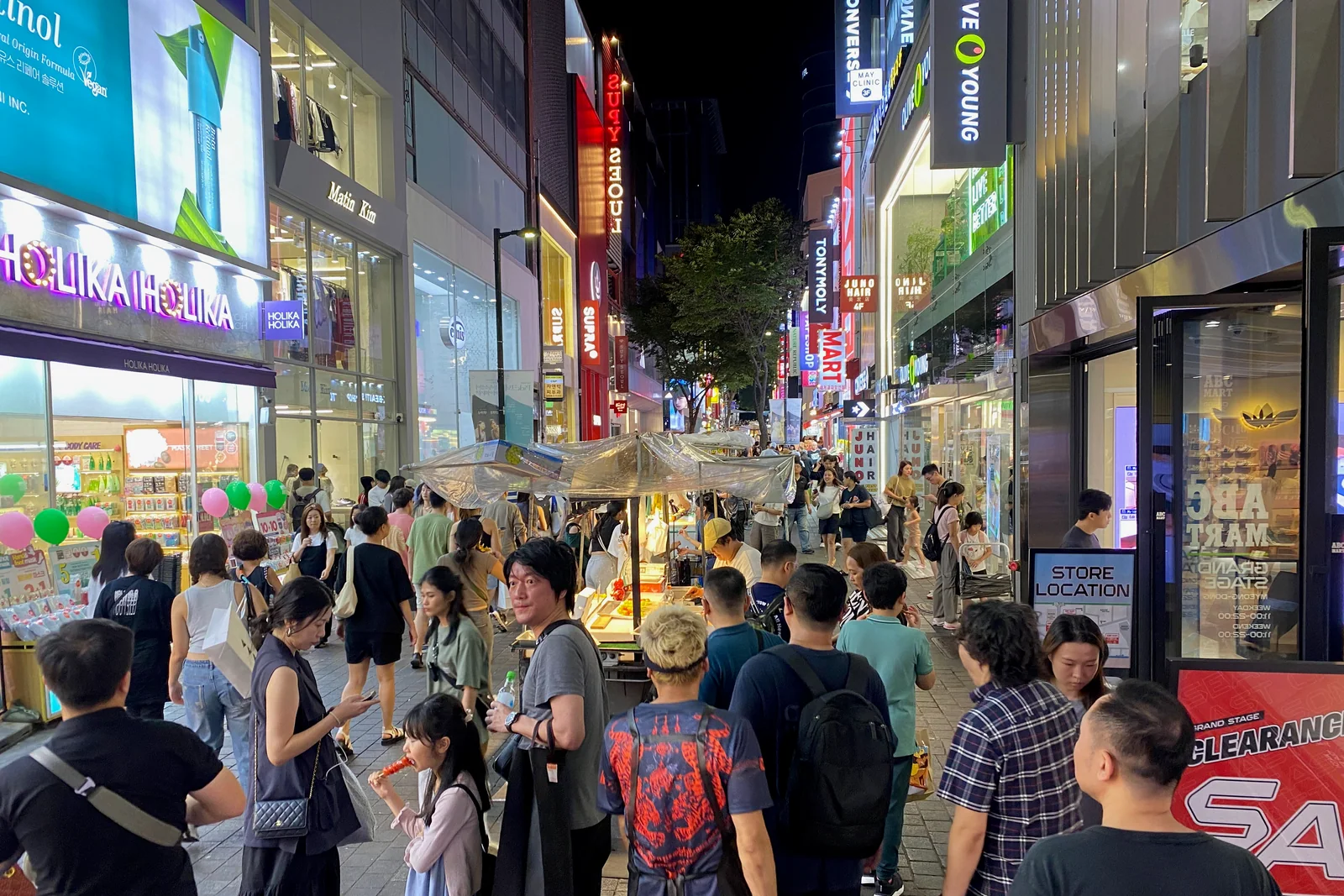
Myeongdong works best when the food plan has two parts: one seated dish that provides a reliable meal and a small number of street snacks selected while walking. Decide which part matters more before arrival. If kalguksu is the anchor, preserve appetite and choose snacks only after the meal. If market-style browsing is the priority, share portions and keep a seated noodle stop as an optional reset rather than another obligation. Save the correct Myeongdong Station side and the address of the chosen public dining area before entering the busiest streets. The neighborhood changes between daytime shopping, evening vending, weather, and special events, so an old stall map is orientation rather than a promise that a particular seller will be present.
Browse one street loop before buying several snacks
Walk a short loop first and note which vendors are operating, what is cooked to order, where queues are forming, and whether the group can stand without blocking shop entrances. A vivid display does not explain ingredients, portion size, cooking oil, or cross-contact. Choose one item at a time, finish it away from moving crowds, and decide whether another purchase still adds something different to the tasting route. Share only when every traveler is comfortable with the ingredients and utensils. Carry tissues and a small waste bag, but use the disposal instructions provided by the seller or district rather than leaving food packaging in a shop bin without permission. In rain, heat, or heavy congestion, shorten the street section and move the tasting plan indoors.
Use kalguksu as the seated anchor, not an extra course
A kalguksu stop gives the route a clear meal structure: arrive, confirm the menu and ordering method, sit when directed, and then decide how much street tasting remains sensible. Do not assume that every bowl uses the same broth, garnish, dumpling filling, or side dishes. Ask about ingredients that matter before ordering, especially meat stock, seafood, egg, wheat, soy, sesame, and fermented seasonings. A noodle shop can have a specialized menu and a fast service rhythm, so agree on the order before the group reaches the counter or table. If a queue, closure, or menu change makes the intended stop unsuitable, choose another verified dining option in the same zone rather than crossing central Seoul for a single famous name. The route should survive the loss of one business.
Make dietary and allergy limits explicit before payment
Appearance is not a safe ingredient guide. A vegetable-topped snack may contain meat or seafood stock, a sauce may include shellfish or fermented fish, and a shared griddle or fryer may create cross-contact. Vegetarian, vegan, halal, kosher, allergy-sensitive, and medically restricted travelers should identify non-negotiable requirements in Korean and show them before the food is prepared. A seller's friendly reassurance is not the same as certification or an allergen-controlled kitchen. When the answer is unclear, select a simpler packaged item with a readable label or eat at a business that can explain its preparation; skipping an uncertain item is a valid route decision. Travelers with severe allergies should follow their personal medical plan and keep prescribed emergency supplies accessible rather than relying on a travel article to determine safety.
Prepare payment, portions, and a clean stopping point
Payment acceptance can differ between street vendors, counters, and dining rooms. Carry a practical backup rather than assuming that the card used at a department store will work at every food stand. Confirm the amount shown by the seller before tapping or handing over cash, and keep payment cards separate from transit cards in a crowded lane. One traveler can manage payment while another holds bags and food, which reduces dropped items and accidental double orders. Set a stopping rule based on appetite and the return plan: the purpose is to understand a few contrasting foods, not to consume every photographed item. Leave room for water and a seated break, avoid carrying uncovered food into restricted shops or transit areas, and end the tasting loop near the station side that supports the next confirmed destination.
Recheck the live district and keep the route replaceable
Use official Seoul tourism guidance to confirm the Myeongdong district and current visitor notices, the dedicated food and kalguksu references for destination context, and Seoul Metro for the live transport layer. Individual businesses remain responsible for their own opening status, menu, ingredients, queue system, and payment acceptance. This page therefore preserves no fixed stall list, price, serving hour, or guarantee that a named dish is available. Recheck the intended seated stop on the visit date and treat the street section as a flexible scan of lawful vendors that are actually operating. A practical route is simple: arrive on the useful station side, inspect before ordering, protect dietary needs, use one seated anchor, keep payment options separate, and finish near a straightforward return entrance.