Use the route below for planning, then open the linked sources for details that can change.
Divide Myeongdong into a shopping side and a hillside side
Myeongdong Station is useful for both the dense shopping district north of the station and routes that begin toward the Namsan side, but those are not the same surface decision. Name the first destination before leaving the train: a hotel entrance, a particular shopping block, a meeting point, or the start of a hillside connection. A generic Myeongdong map pin encourages visitors to follow the busiest crowd even when their address lies behind the station. Save the road address in Korean and note whether the first walk should remain among level commercial streets or move toward rising terrain. This simple split prevents a luggage arrival, shopping visit, and Namsan outing from being treated as one interchangeable exit problem.
Choose the station side from the first street block
Select the exit area by comparing the destination block with the roads around the station, not by memorizing an exit number from a video. Temporary closures and one-way passenger controls can change which stairway is practical. While still inside, identify the first road crossing and the direction of the next landmark; outside, confirm the street name before walking deeper into the crowd. If the chosen exit places the group on the wrong side, use a lawful crossing and recalculate rather than moving through traffic or hauling bags over an improvised route. A hotel can advertise a short distance from Myeongdong Station while its entrance, reception level, or slope makes another station approach more comfortable.
Walk one shopping spine instead of zigzagging between saves
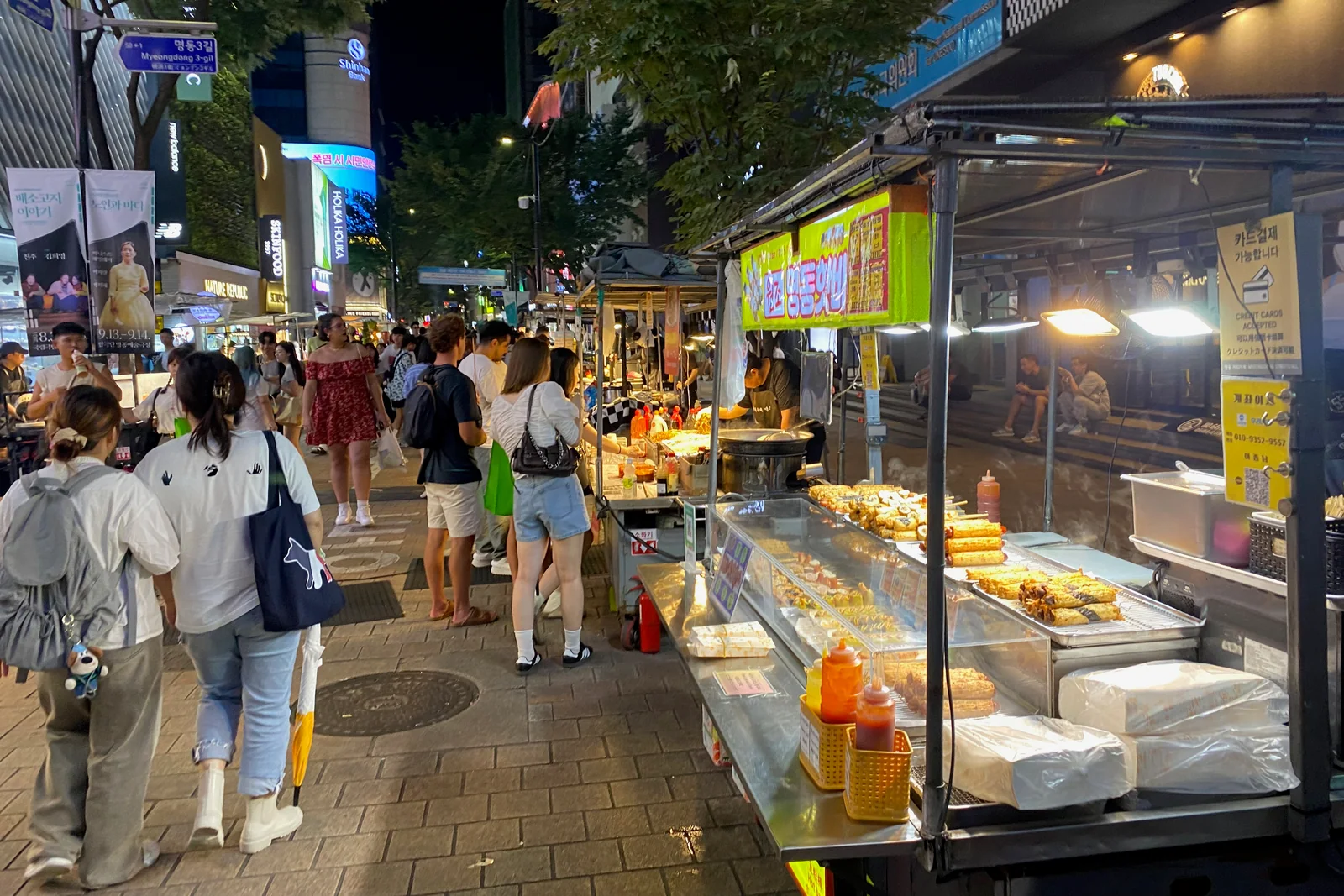
For a shopping visit, set one near-side anchor and one far-side finish, then place optional stores or food stops between them. This gives the group a visible direction through crowded blocks and makes it easy to remove a stop without retracing the whole district. Confirm individual business details directly; tenants, opening conditions, queue systems, and product availability are too changeable for a station guide to promise. Keep building entrances and delivery paths clear while checking maps. When purchases become bulky, decide whether to return to the accommodation, use a verified service, or end the fixed route. Carrying bags across the district merely to collect another saved pin can erase the transport advantage that made Myeongdong convenient.
Treat a Namsan connection as a terrain decision
The word nearby on a flat map does not describe the climb toward Namsan-area destinations. Check the current official visitor route for the exact attraction or facility and consider weather, visibility, footwear, mobility needs, and the return after dark. Do not assume that a cable car, shuttle, lift, or pedestrian path is operating merely because an old itinerary used it. If the uphill segment is the day's anchor, approach it with minimal shopping baggage and preserve a lower-level alternative in Myeongdong. Travelers who begin with shopping can instead end the fixed plan near the station and treat the hillside as optional. This keeps a closed facility or low-energy group from turning one missed viewpoint into a rushed cross-city replacement.
Place food, rest, and the return on the same route
Myeongdong can become tiring because browsing expands to fill the entire visit. Choose a meal or rest zone that continues the planned direction rather than crossing the district for a single recommendation. Verify dietary, allergy, seating, and payment needs with the business itself; a famous food area cannot guarantee an individual requirement. Keep one indoor rest option for rain, heat, cold, or crowd fatigue, but confirm it is legitimately open to the public. Before the final stop, decide which station entrance or onward central-Seoul route the group will use. A visit that ends near a known exit is more workable than a shopping list that leaves everyone on an unfamiliar edge of the district with low batteries and full bags.
Verify current station and destination conditions
Seoul Metro is the authority for the live station and rail layer, while Visit Seoul provides official destination context for Myeongdong and nearby visitor areas. Check them close to travel and use on-site signs for any changed exit or pedestrian arrangement. We do not keep business hours, store claims, attraction tickets, fares, or a guaranteed hillside connection. Save the hotel or anchor address, first road crossing, suitable return entrance, and a nearby low-terrain fallback before leaving the station. In practice, separate shopping from the Namsan side, walk one commercial direction, manage bags before they control the route, and keep the return leg simple enough to execute after a crowded evening.