Use the route below for planning, then open the linked sources for details that can change.
Name the operator and service before following signs
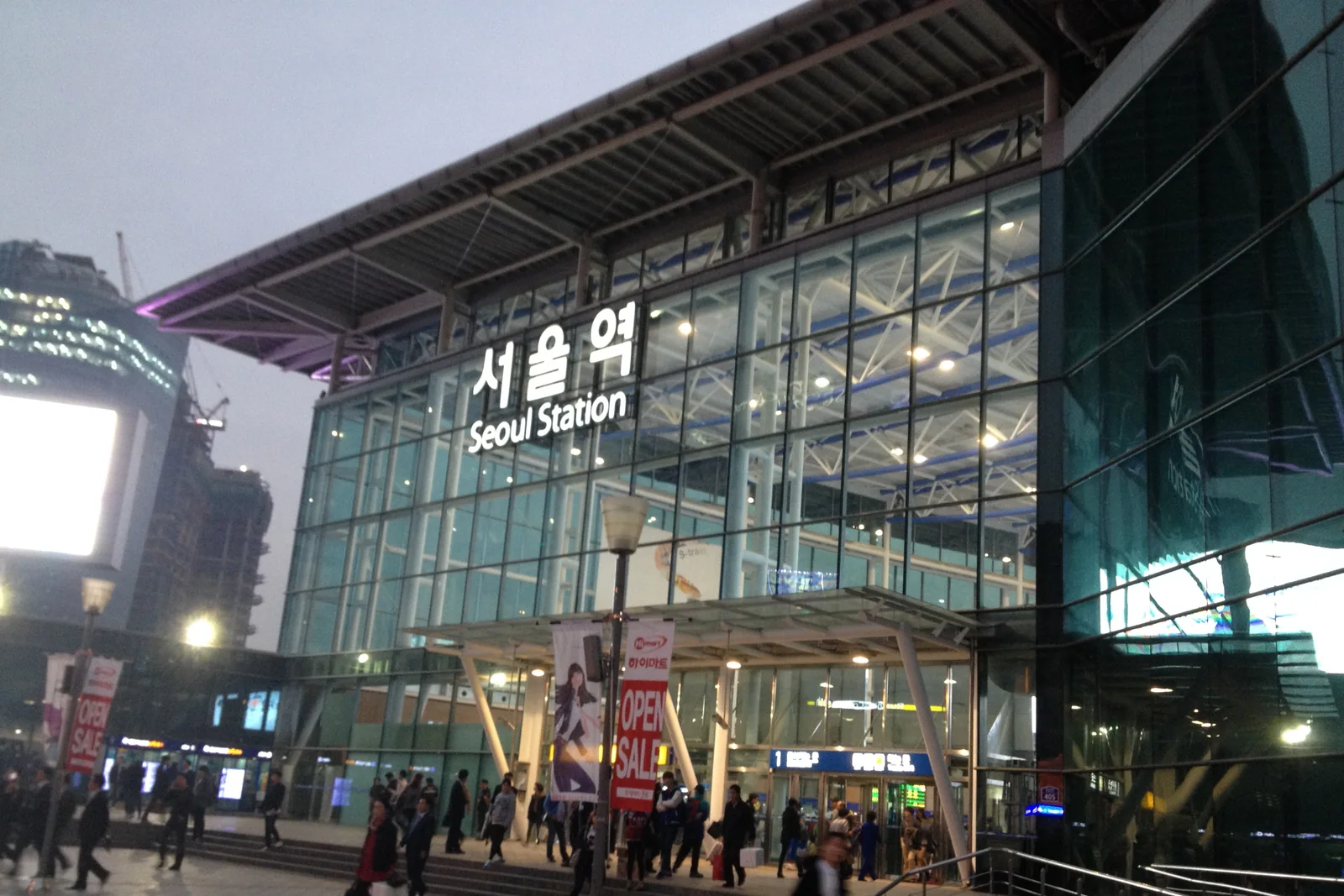
Seoul Station is a shared destination name for several different travel systems, not one small entrance leading to every platform. Before approaching the complex, open the booking or route result and identify whether the next step belongs to KORAIL, Airport Railroad, or Seoul Metro. Save the train or subway line, destination, and any reservation reference in a form that works without mobile data. General signs for Seoul Station can bring a traveler to the wider complex while still leaving a substantial indoor walk. The first successful decision is therefore not an exit number; it is the correct operator area. Once that is clear, the remaining signs become far easier to interpret.
Approach the complex from the side that fits the task
A street address near Seoul Station may be closer to one entrance than another, and a taxi drop-off or subway arrival can place the traveler at a different level from the required concourse. Check the exact destination inside the complex before accepting a generic map pin. With luggage, prioritize a route that uses available elevators and reduces road crossings even when it appears slightly longer on a flat map. For a meeting, choose a named public landmark within the relevant operator area and share a fallback point in case companions enter from another side. Current entrance, lift, construction, and accessibility conditions belong to the operator's live information and on-site signs.
Treat an intercity rail departure as a reserved journey
For a KORAIL journey, keep the current booking record, train information, destination, and passenger details accessible before entering the station. Confirm that the date and Seoul departure station match the itinerary; similar city and station names should not be resolved from memory. Reach the KORAIL area with enough margin to locate the correct departure information, buy essentials, and ask staff a question without running through the complex. Platform information can be operational, so use the current station display rather than a screenshot from an earlier trip. A transit card used elsewhere in Seoul does not replace an intercity reservation when the selected service requires its own ticket.
Keep the Airport Railroad process separate
Airport Railroad has its own station area and current service instructions. Confirm the Incheon terminal used by the flight, the service category selected, and any ticket or eligibility conditions on the official Airport Railroad source. Travelers using the city airport terminal should first open the dedicated eligibility guide because city check-in is a specialized process, not a general facility for every airport passenger. Allow for the indoor journey between a hotel transfer, subway arrival, or KORAIL concourse and the Airport Railroad area. After boarding, the correct airport terminal remains the traveler's responsibility, so keep the operating airline and terminal visible throughout the trip.
Use the line and direction for a subway decision
A subway route should be described by the relevant line, direction, transfer, and destination rather than by the station name alone. Recheck the current Seoul Metro route and facility information, especially when luggage, a stroller, or step-free access affects the transfer. Follow signs for the subway operator only after separating that journey from KORAIL and Airport Railroad. If the trip requires a transfer elsewhere, save the line used after the transfer as well as the final station. On arrival at Seoul Station, do not leave the paid area merely because a street-level Seoul Station sign appears; confirm whether the route requires continuing inside the network or exiting toward a separate operator.
Control luggage, meetings, and the final street exit
Large stations become difficult when several small decisions are postponed until the concourse. Assign one traveler to documents and another to luggage, keep essential medicine and valuables out of stored bags, and avoid blocking circulation while checking a map. For a city arrival, save the hotel road address and select the final street exit from that address, not from a general neighborhood label. For a departure, verify the current operator information again before leaving the accommodation. We leave out hard-coding a platform, fare, operating hour, or permanent indoor path. A practical approach is operator first, correct station area second, live departure information third, and the street-level route only after the rail task is complete.