Use the route below for planning, then open the linked sources for details that can change.
Follow the full transfer sequence, not just the rail line
A practical approach is: finish the arrival process at Gimpo, collect any baggage that is not checked through, move from the domestic or international passenger area to Gimpo Airport Station, take Airport Railroad in the Incheon Airport direction, get off at the station for the confirmed departure terminal, and complete the onward airline's departure process. The official Gimpo transport page shows Airport Railroad among the rail services at the airport, while Incheon Airport lists AREX, airport buses, and taxis as airport-to-airport options. This page does not promise a connection time. Your usable margin depends on the inbound arrival, ticket protection, baggage, walking, waiting, the correct Incheon terminal, and the airline's current acceptance requirements.
Get four answers before accepting the itinerary
Ask the airlines or booking agent four questions: are both flights on one protected itinerary, is checked baggage tagged to the final destination, must the traveler complete any arrival formalities before leaving Gimpo, and which Incheon terminal handles the operating flight? Keep the written answer with both booking references. Do not infer protection or through-check from an alliance logo, codeshare, or a single booking screen. If the flights are separate, the baggage must be collected, or the airline will not confirm protection, plan as a self-transfer and accept that the onward ticket may be at risk after a delay. Travelers who need mobility assistance, oversized-bag handling, visas, or document checks should resolve those requirements with the responsible airline before relying on the route.
At Gimpo, navigate by terminal, operator, and direction
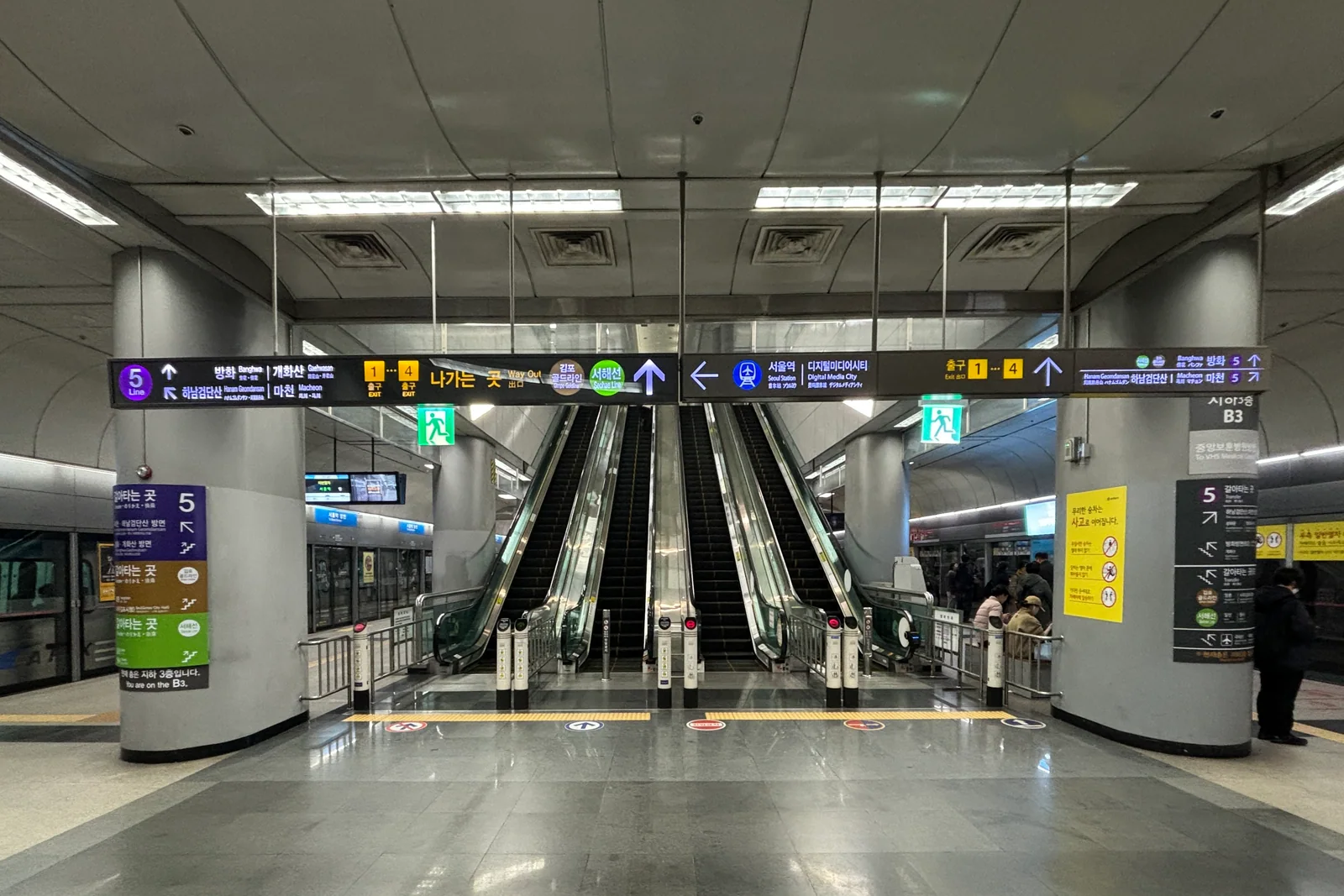
After all required arrival and baggage tasks are complete, identify whether you are leaving Gimpo's domestic or international passenger area and follow the airport's current signs to the rail station. Multiple rail lines serve Gimpo Airport Station, so the station name alone does not identify the right platform. Look for Airport Railroad and the Incheon Airport direction, then confirm the displayed destination before boarding. With a suitcase, stroller, wheelchair, or a group, allow for lifts, corridors, and regrouping rather than choosing a route solely because it has the shortest map estimate. If construction, a closed passage, or staff direction disagrees with a saved video, follow the live signs. Keep the onward terminal and flight number visible throughout this leg.
Choose rail or road from the group's real constraint
Airport Railroad provides a direct rail corridor between the airport station names and avoids road traffic, but the complete effort includes terminal-to-station walks, waiting, bags, and the correct Incheon stop. A licensed road transfer may reduce bag handling or help a group with mobility needs, but traffic can make its arrival uncertain. Airport buses are another official category whose current route and boarding details must be checked on the travel day. Compare the options only after the flight terminal, group size, baggage, assistance needs, and remaining margin are known. Do not mix a best-case train ride with worst-case road traffic to force a preferred answer. If the remaining margin is already unsafe under ordinary disruption, changing the flight plan is more reliable than selecting a faster-looking vehicle.
Protect the terminal decision and act early on delays
Confirm the operating airline and Incheon terminal from the current e-ticket, airline, or Incheon flight search before leaving Gimpo. Codeshares and airline changes make brand recognition an unsafe terminal shortcut. If you arrive at the wrong terminal, use Incheon Airport's current inter-terminal directions; do not attempt to walk between terminal buildings or improvise through restricted areas. If the inbound flight is delayed, check the baggage status and contact the onward airline or booking agent as soon as communication is available. State that the itinerary changes airports and whether the tickets are separate. Keep passports, essential medicine, booking details, baggage receipts, and phone power with the traveler rather than in a bag that may be delayed.
Open the three live systems before travel
Use Gimpo Airport for the current passenger-area and ground-transport path, Airport Railroad for live train operation, and Incheon Airport for the departure terminal, inter-terminal help, and onward airport procedures. The airline remains the authority for check-in, documents, baggage, through-check, and ticket protection. Recheck all four on the travel date. This guide carries no fixed fare, departure time, service interval, platform number, minimum connection, or connection guarantee. Save the sequence offline: Gimpo arrival tasks, baggage decision, route to Airport Railroad, Incheon-bound platform, correct terminal station, airline counter or process, and delay contact. If any live instruction conflicts with an old screenshot or this page, follow the operator and airline.