Use the route below for planning, then open the linked sources for details that can change.
Quick answer: T1 to T2 at a glance
For an Incheon Airport Terminal 1 to Terminal 2 transfer in the public area, choose between the free airport shuttle bus and the paid Airport Railroad. The bus is useful when its curbside boarding point and current schedule fit; AREX is a short rail ride with a separate fare. If you are connecting between flights without entering Korea, do not use either landside option. Follow the green Transfer signs and the airport's secure shuttle-train route for the exact arrival and departure terminals. Do not plan to walk between T1 and T2; the airport directs landside travelers to the shuttle or Airport Railroad. Before moving, check the operating airline on the next flight, whether you already hold its boarding pass, and whether checked baggage is through-checked or must be collected.
T1 to T2 by free shuttle bus
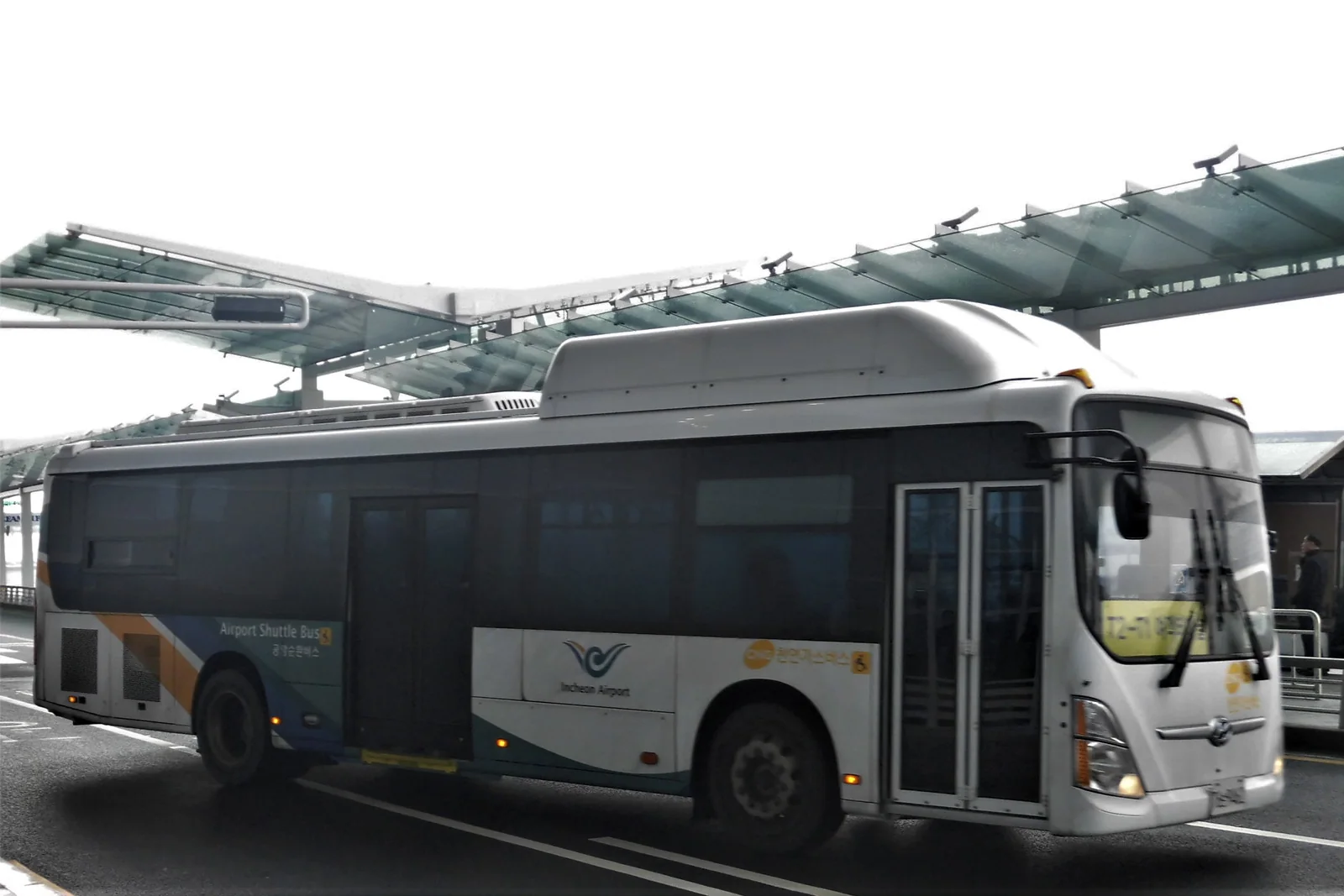
From Terminal 1, go to the departure level and use the boarding point shown in the current fact table below. Check that the vehicle and stop display show Terminal 2; other airport shuttles serve parking and business areas. The official route continues through a reserved-parking stop before reaching T2, so the vehicle ride is not the whole transfer. Add time to reach the curb, wait for the next bus, unload luggage, enter Terminal 2, and find the correct check-in or transfer zone. Keep suitcases with the group and ask airport staff about lift-car assistance in advance if a wheelchair user cannot board the regular shuttle. Reopen the official timetable on travel day because the first and last departure and service interval can change.
- T1 to T2 shuttle pickup
- Terminal 1, 3F, in front of Gate 8
- T1 to T2 shuttle schedule
- Free; 04:30–23:20; every 10–20 minutes
T1 to T2 by AREX: time and fare
Airport Railroad is the paid landside alternative in either direction. The official airport page describes the inter-terminal ride itself as about six minutes, but the practical trip also includes walking to the station, buying or validating a ticket, waiting for the train, and reaching the airline zone at the other end. Compare that full path with the shuttle rather than treating the onboard time as the connection time. AREX is not the secure shuttle train used by eligible airside passengers, and an AREX ticket does not solve immigration, baggage, or airline check-in requirements. Check the current rail display before purchase and keep enough buffer for every remaining airport procedure.
- AREX inter-terminal ride
- Approximately 6 minutes
- AREX inter-terminal fare
- KRW 1,050
T2 to T1 by free shuttle bus
From Terminal 2, use the departure-level pickup point in the fact table and verify that the shuttle display shows the Terminal 1 direction. This route continues beyond T1 to other airport facilities, so listen for the terminal stop and leave the bus with all bags and companions. Its published interval differs from the T1-to-T2 route; do not reuse a screenshot from the opposite direction. Allow time after arrival to enter T1 and reach the operating airline's counter or departure area. Wheelchair users who need the airport's free lift-car service should contact the shuttle operator ahead of time because availability depends on vehicles and staff.
- T2 to T1 shuttle pickup
- Terminal 2, 3F, in front of Gate 7
- T2 to T1 shuttle schedule
- Free; 04:30–23:35; every 7–20 minutes
Airside T1–T2 flight transfer: immigration and baggage
A protected international connection uses the secure transfer route, not the curbside bus or AREX. Follow the green Transfer signs for the exact arrival-to-departure terminal pair. The airport's T1-to-T2 and T2-to-T1 directions include transfer screening and secure shuttle-train stages through the concourse; follow that one-way sequence and on-site signs rather than trying to reverse it. If you do not have the next boarding pass, the airport says issuance depends on the airline and directs passengers to a transfer desk near the gate. Whether you must enter Korea or collect baggage is a ticket and airline question, not something to infer from terminal numbers. Confirm through-check status with the operating carriers before leaving the secure route.
Separate tickets and checked baggage
Treat separate tickets as a self-transfer unless both airlines clearly confirm connection protection and through-checked baggage. A self-transfer may require entry permission for Korea, immigration, baggage collection, customs, a landside terminal change, a new airline check-in, security, and departure immigration. Build the buffer around that entire sequence, not around the short bus or train ride. Check the next airline's baggage-acceptance deadline and document rules before travel, and contact it immediately if the inbound flight is delayed. The airport can explain the route between terminals, but it cannot protect a separate booking or guarantee that a late passenger will be accepted.
Wrong terminal before departure
If a taxi, bus, or train leaves you at the wrong terminal before departure, remain landside and verify the operating carrier and flight number before changing terminals. Codeshares are a common source of confusion because the airline that sold the ticket may not operate the aircraft. Use the live airport flight search, airline app, or information counter; do not rely on a terminal remembered from an earlier trip. Then choose the free shuttle or paid AREX based on the current wait, luggage, mobility, and remaining check-in time. Tell airline staff promptly if the terminal mistake threatens a deadline. Moving first and checking later can waste the buffer needed for baggage acceptance, document checks, and security.
Incheon Airport terminal transfer FAQ
Is the T1–T2 shuttle free? Yes, the airport's inter-terminal shuttle is free; use the direction-specific pickup point and timetable above. Is AREX free? No, the inter-terminal Airport Railroad ride requires a fare. Can you walk between terminals? Do not plan to walk; the airport directs landside travelers to the shuttle or AREX, while eligible airside connections use the secure process. Do airside passengers take the public bus? No. Eligible flight connections follow green Transfer signs and the secure shuttle train. Must a connecting passenger clear immigration? It depends on the itinerary, boarding pass, baggage arrangement, and airline instructions. Do separate tickets change the answer? Often: assume a landside self-transfer until the airlines explicitly confirm through-check and protection. Recheck the linked airport and airline guidance on travel day.