Use the route below for planning, then open the linked sources for details that can change.
Start with live official status, not a copied checklist
Korea entry preparation involves several systems that answer different questions. A visa or visa-free status concerns permission to seek entry. K-ETA is an electronic travel authorization for travelers covered by its current rules. The e-Arrival Card records arrival information for travelers who must make that declaration. Customs reporting covers goods, currency, and other declarable items rather than immigration permission. Open the official Korea Immigration Service, K-ETA, e-Arrival Card, and Korea Customs pages in that order. Use the passport and travel status that will be valid for the actual journey. A friend's recent experience or an airline forum answer cannot establish what applies to a different passport, residence status, route, or travel date.
Separate authorization from the arrival declaration
Do not complete every form simply because its name appears in a search result. First use the official K-ETA guidance to determine whether the traveler should apply, is covered by a current exemption, already holds a valid authorization, or should follow a visa process instead. Then use the official e-Arrival Card navigator to check whether an arrival declaration is required for that same traveler. A traveler with approved K-ETA is exempt from submitting an arrival card. A traveler who is exempt from applying for K-ETA should not assume that this is the same as holding an approved K-ETA, so the e-Arrival Card navigator still matters. A visa or residence document can create a different path. Treat each portal's result as belonging to one passport holder. Families should run the check for every traveler rather than assuming that one adult's result automatically covers companions.
- Arrival card for approved K-ETA holders
- Exempt from submitting an arrival card
Prepare consistent passport and stay details
Before typing, place the passport, flight information, first accommodation address, contact details, and onward plan together. Enter names and document numbers exactly as the official portal requests, preserving the passport's order and spelling. Use the accommodation's road address or the format supplied by the property instead of guessing from a neighborhood name. If a flight, passport, purpose, or place of stay changes after submission, return to the relevant official portal and follow its update instructions. Keep email access available during travel because confirmation and verification steps may depend on it. Consistent information reduces avoidable questions, but an electronic confirmation never replaces the physical passport or any visa and residence evidence required for the trip.
Avoid paid copycat and expedited-form claims
Search advertisements and look-alike sites can appear before government results. Verify the complete domain before entering passport, face image, card, or accommodation data. The official e-Arrival Card uses a Korean government domain and states that the service itself is free. It also says to complete and submit the declaration within three days before arrival in Korea. The official K-ETA guide publishes its application fee and typical assessment window, warns that assessment can take longer, and states that there is no expedited service. Check those facts on the official portal before paying because unofficial agencies and phishing pages can charge more. Do not pay a third party merely to reach a form, and do not believe a promise that an intermediary can override government assessment. If the browser address, government emblem, language selector, or fee request does not match the official source, stop. Reopen the portal from the Korea Immigration Service rather than continuing through the suspicious page.
- Official e-Arrival Card fee
- No fee required
- Submission window
- Within 3 days before arrival in Korea
- Official K-ETA application fee
- KRW 10,000 plus an online payment fee
- Typical K-ETA assessment window
- Usually 72 hours or less; it may take longer and there is no expedited service
Treat customs as a separate truthful declaration
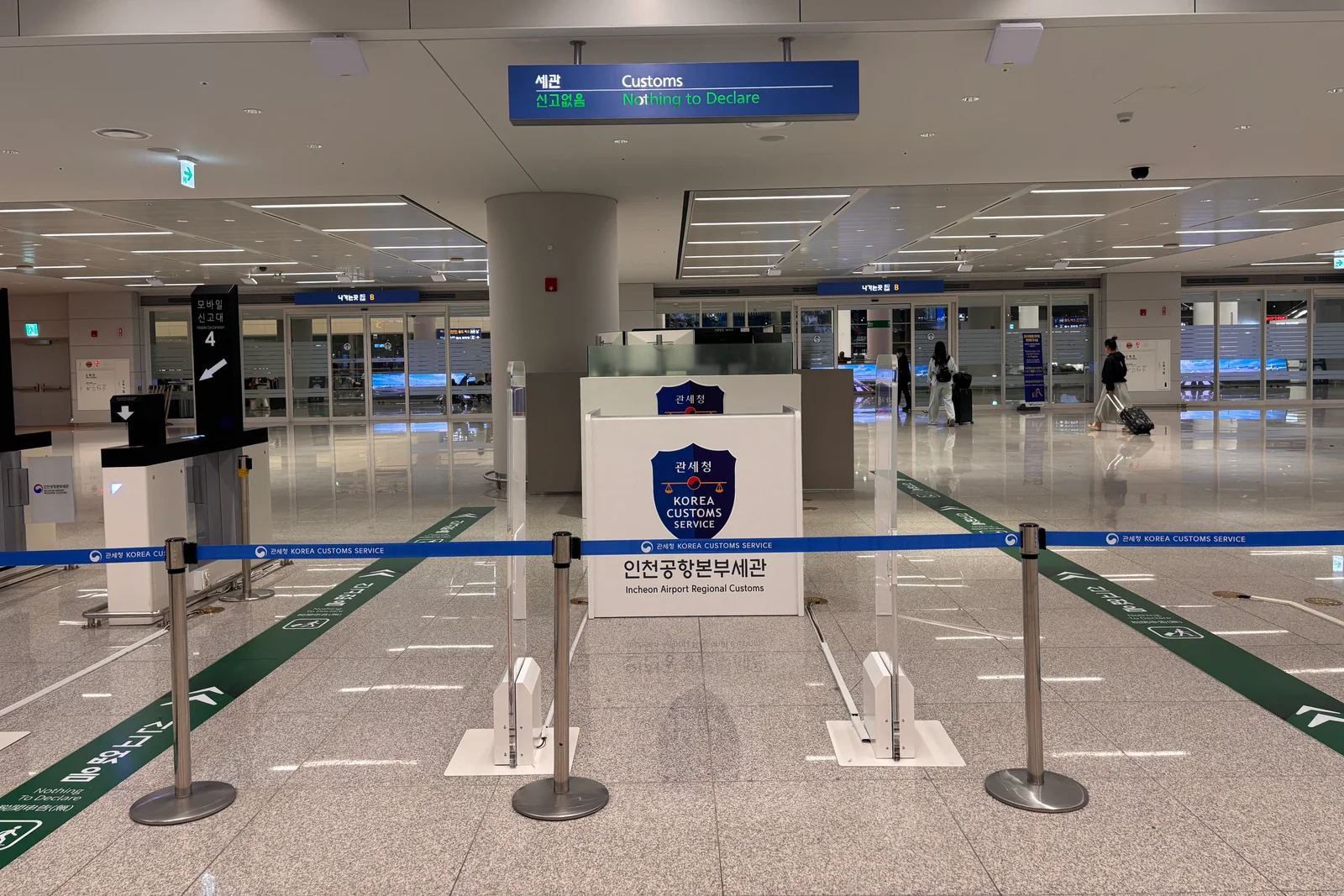
Immigration clearance does not answer the customs questions. Review the Korea Customs Service traveler declaration material for the items actually carried, including purchases, gifts, food, medicine, commercial goods, restricted products, and currency. Do not copy another traveler's yes-or-no answers because allowances and reporting duties depend on the goods and circumstances. Keep receipts and prescriptions where they can be shown, and use the official customs help path when an item is unclear. Declaring an item for inspection is different from assuming it is prohibited. Thresholds and allowances can change and may have category-specific conditions, so check the current Customs page close to arrival.
Save records and recheck before departure
After completing an official step, save the confirmation or reference in a secure place that can be reached without relying on airport Wi-Fi. Keep it separate from public photo albums and shared itinerary documents that expose passport data. Before departure, reopen the official services and confirm that the passport, travel information, and submission status still match the journey. Check airline document reminders as operational guidance, but resolve eligibility questions through Korean government sources. On arrival, follow immigration and customs officers even when an older screenshot says something different. Exemptions, portal sign-in, declarations, and border procedures can change, so verify your status again, use only official domains, submit the forms that apply to you, and keep the resulting records.