Use the route below for planning, then open the linked sources for details that can change.
Complete Terminal 2 arrival tasks before buying rail
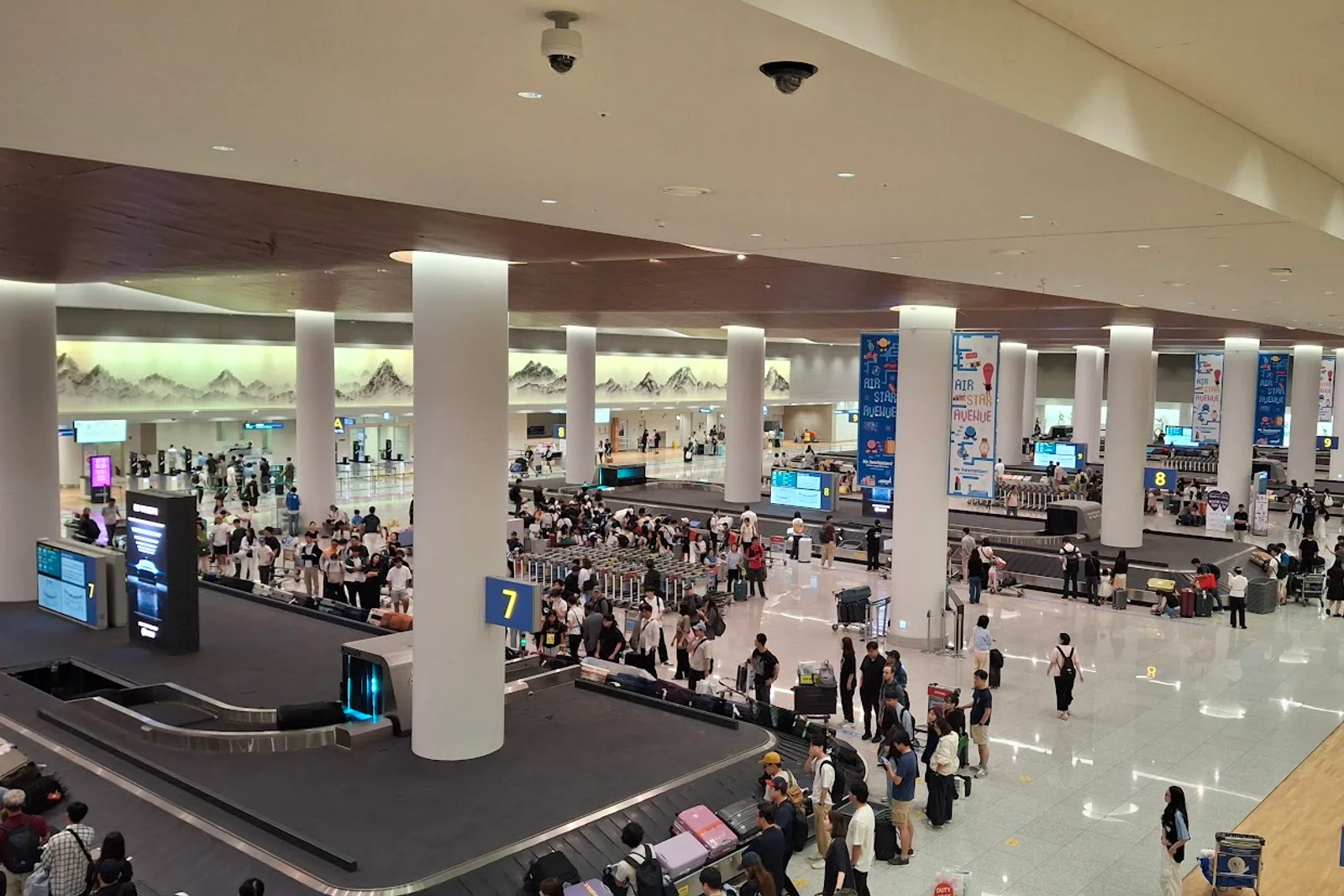
A scheduled landing is not a station arrival. Immigration, baggage delivery, customs, connectivity, cash or card preparation, and reuniting with companions all happen before a traveler can make a sound rail decision. Keep the Terminal 2 identity visible on the flight record and accommodation note; Terminal 1 instructions are not interchangeable. Once the group reaches the public arrivals area, confirm that every bag and traveler is present, then follow the airport's Transportation Center signs. The official airport rail guide places the Terminal 2 rail facilities in the Transportation Center on basement level 1. That current official wayfinding is more useful than a video filmed from another arrival gate or terminal.
Choose the Airport Railroad product from the final address
Airport Railroad offers services with different stopping patterns and ticket conditions. Do not choose by the word express alone. Write down the Seoul station or neighborhood that makes the final walk or transfer easiest, then compare the complete trip with luggage. A Seoul Station destination may favor one product, while an accommodation near another Airport Railroad stop can make an all-stop journey more direct. Check the live operator page for the service, fare, timetable, and ticket process on the day. If a transfer to Seoul Metro remains, include the corridor, lift path, and final street walk in the comparison. The best train is the one that completes the door-to-door task, not merely the fastest airport segment.
Follow Terminal 2 signs to B1 without improvised shortcuts
The public arrival hall, parking and transport areas, airline floors, and rail concourse are separate parts of a large terminal complex. Use the overhead Transportation Center and Airport Railroad signs, and ask an airport information desk from the level where uncertainty begins. Travelers using lifts should follow the signed accessible route rather than copying companions onto stairs and hoping to meet below. Stop at the side before opening maps or reorganizing suitcases. At the ticket area, confirm the service and direction shown on the current display before payment. A general Seoul arrow is not enough evidence that the group has reached the correct platform for the product purchased.
Let luggage determine the number of transfers
A route with two rail changes may be inexpensive yet unsuitable for oversized cases, a stroller, limited mobility, or a late and tired group. Count every lift, corridor, ticket boundary, and surface crossing after the airport train. Keep documents, medicine, electronics, and valuables in personal custody. If luggage delivery or storage is considered, verify its provider, cutoff, destination coverage, size conditions, and retrieval process directly; the airport's rail page lists service context but cannot guarantee availability for a particular bag. A taxi from the designated queue can be a rational fallback when the final rail connection fails the group's needs. Reject unsolicited rides and show the driver the exact Korean road address.
Do not transfer to Terminal 1 just to follow familiar directions
Terminal 2 has its own Airport Railroad station and ground-transport facilities. A city-bound passenger should not travel to Terminal 1 merely because a blog, friend, or old screenshot explains that terminal better. If the airline or a departure task genuinely requires the other terminal, use Incheon Airport's current landside inter-terminal guidance and allow a separate margin. Secure airside flight transfers follow a different process and should be handled through the airline and airport transfer signs, not this city-arrival route. When flight documents and a saved transport note disagree about the terminal, resolve the operating airline and live terminal first. Moving baggage between terminals is a recovery action, not a sightseeing shortcut.
Refresh the plan after reaching public arrivals
Incheon Airport controls terminal wayfinding and facility information; Airport Railroad controls its products and operations; the accommodation controls the practical last walk. Reopen all three after baggage collection because a delayed flight can remove the service originally planned. Check the live fare, platform, last departure, and expected processing time. Save the primary rail route, a lower-transfer alternative, and an official road fallback before flying, but choose among them only after you know the actual Terminal 2 arrival time. Confirm the terminal, complete immigration and baggage collection, regroup in public arrivals, follow signs to the B1 Transportation Center, choose the current product, and make sure the final connection has lifts and a walking distance the whole group can manage.