Use the route below for planning, then open the linked sources for details that can change.
Map the address to one side of Gangnam Station
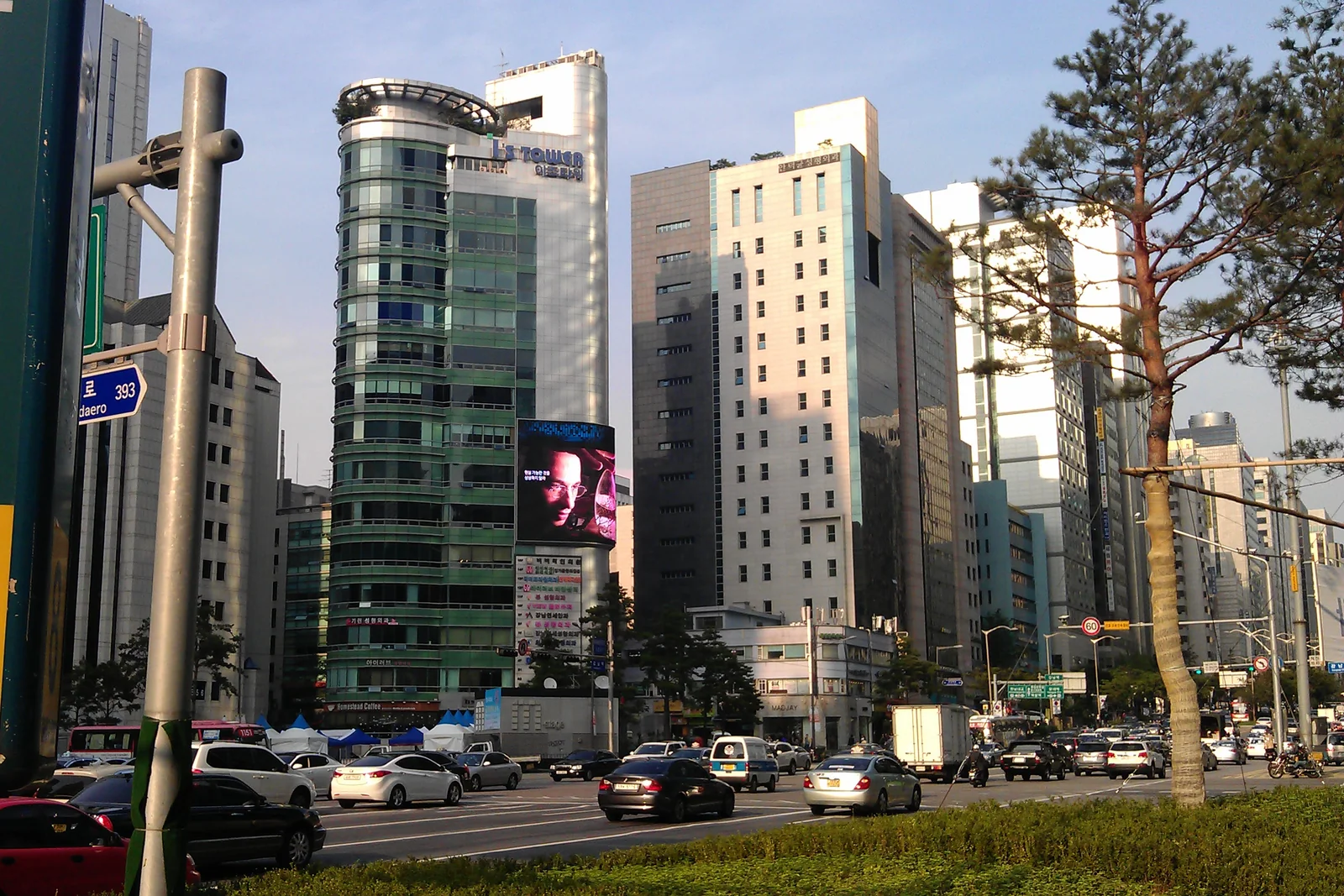
Gangnam Station sits below a major junction where wide roads divide office blocks, shopping streets, academies, restaurants, and bus connections. The station name is therefore less useful than the complete destination address. Save the building name in Korean, the road address, and one permanent surface landmark, then identify which side of the junction contains them. Do this before entering the station or approaching from a bus, because an incorrect side can require a long underground correction or several busy crossings. A meeting described only as near Gangnam Station is not precise enough for travelers arriving through different rail services. Share the building entrance or another named public point and a second landmark in case companions surface on opposite blocks.
Separate the rail transfer from the surface exit
Gangnam is served through more than one rail-service context, and the transfer decision must be completed before the street-exit decision begins. Keep the operator, direction, and next platform visible while inside the paid area. If the station is the destination, follow signs toward the correct road side only after confirming that no further transfer is required. A general Gangnam arrow can be accurate yet still place the traveler far from the booked entrance. With luggage or limited mobility, check the current accessible route for the operator actually used and allow for a longer corridor. Never force through a closing gate or cross passenger flow to rescue a remembered exit number; return to a confirmed sign or ask staff.
Navigate to the building, then verify the entrance
Large Gangnam buildings can have several doors, underground connections, towers, or tenants, so reaching the correct parcel is not always the end of the route. Keep the company, clinic, event, restaurant, or hotel name together with the building and floor information supplied by the booking. Confirm visitor access with that organization rather than assuming every lobby or internal connection is public. When the map and exterior signage differ, stop in a lawful public space and contact the destination before entering another tower. For a casual visit, use one established commercial block as the anchor and keep optional shops on the same side of the main road. This prevents repeated underground crossings merely to chase saved businesses.
Confirm the correct curb for a bus or pickup
A road connection around Gangnam Station depends on direction as well as stop name. Opposing bus stops, taxi stands, and pickup zones may serve different traffic flows even when their labels share Gangnam. Use the current operator or booking information to identify the boarding side and show the exact destination rather than asking for a generic Gangnam pickup. Meet a hired vehicle only in a lawful designated area and compare the registration details when the service provides them. If the curb is congested or temporarily controlled, follow staff and road signs instead of requesting an unsafe stop. A traveler transferring to a regional bus or another terminal should verify the facility itself; Gangnam district and a particular terminal are not synonyms.
Keep the visit within one commercial direction
Choose one fixed anchor, such as a reservation, business appointment, reviewed shop, or meal, and place flexible stops between it and the return entrance. Gangnam's dense grid can make several recommendations look adjacent while wide junctions and long blocks turn them into a tiring zigzag. Put the time-sensitive stop first and verify each business independently because tenants and operating conditions change. Add food and rest on the same road side when possible. If the next major plan is COEX or Samseong, treat it as a separate journey and open that station guide rather than walking east from an imprecise Gangnam starting point. End while the known rail entrance or road fallback is still easy to reach.
Recheck the station route and destination access
Seoul Metro provides the current station and rail layer, while Visit Seoul offers official context for the broader district. The destination business, organizer, or property must confirm its own entrance and visitor rules. This page avoids fixed exit assignments, travel times, fares, and business hours because they can change without the road geometry changing. Before departure, save the correct road side, Korean address, building entrance clue, and a return or road fallback. On site, let current signs and staff directions override an old image. A practical approach is exact address, correct rail service, correct junction side, verified building access, and one commercial direction that does not require crossing the main roads repeatedly.