Use the route below for planning, then open the linked sources for details that can change.
Choose one of three Seoul route shapes
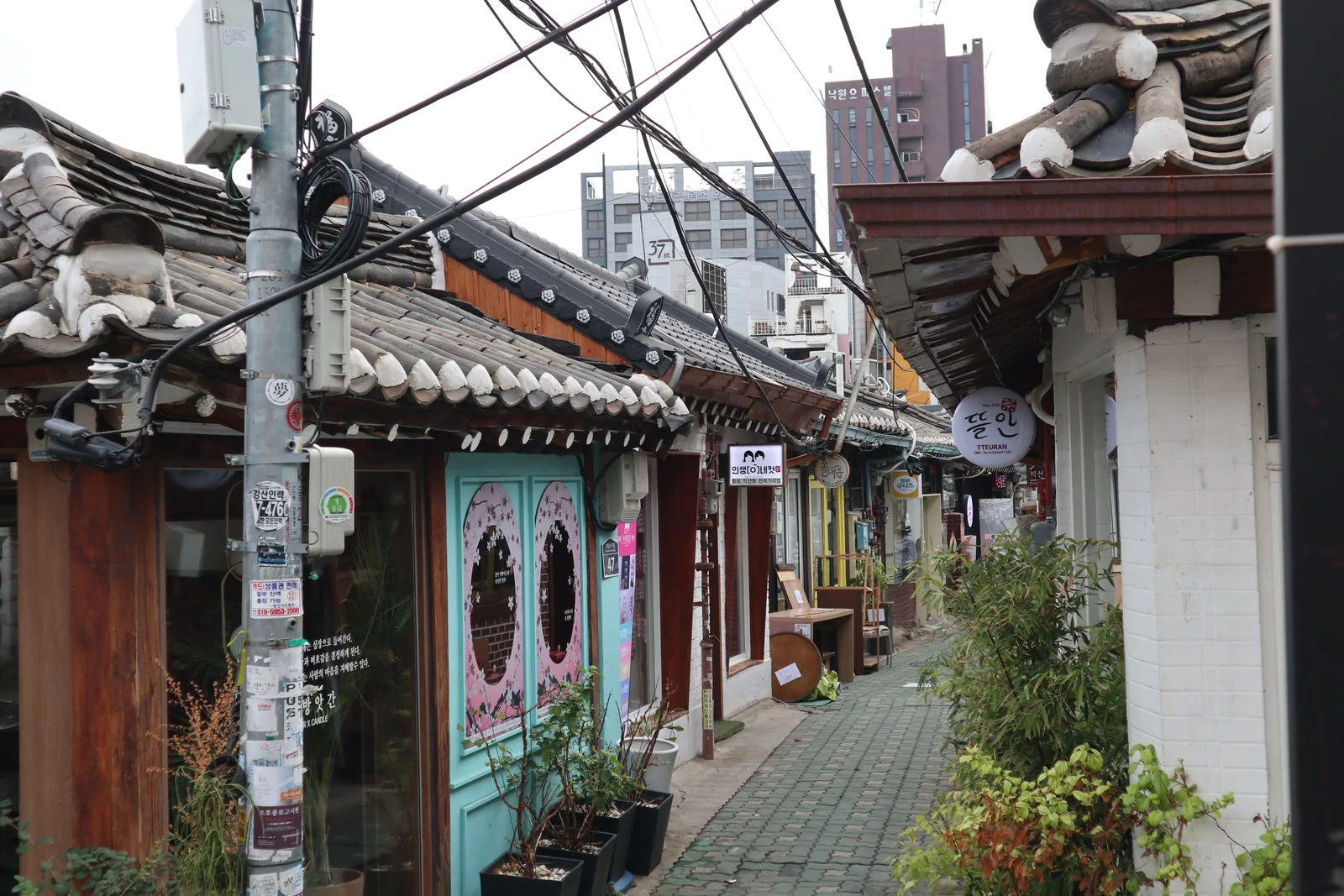
Start with the neighborhood, then choose the drama. The central heritage option uses the verified Goblin route around Unhyeongung and Yunposun-gil. The Itaewon option uses the approved Itaewon Class route and its public streets, with slopes treated as part of the decision. The west-Seoul option starts from an individually verified Hongdae, Yeonnam, or nearby filming-location page and keeps the day in that side of the city. Open the relevant Korea Path drama page before adding any pin because it carries the official tourism references and the location-specific visitor boundary. Pick one primary cluster. Add a second cluster only when the current journey is simple and removing it would not damage the return. This is a route selector, not permission to combine every title named on the site.
Turn saved fan pins into a verified shortlist
For every candidate, record the exact place name, the accountable tourism or venue source that connects it to the production, the part open to ordinary visitors, and the nearest useful station area. A screenshot, visual resemblance, reposted list, or map label is not enough. Remove a candidate if the relationship cannot be traced through the individual drama guide, if reaching the camera angle requires private access, or if current visitor use is unclear. Then rank the survivors as must-see, removable, or fallback. Two confirmed public places plus a neighborhood activity make a stronger day than a long list of uncertain addresses. This check also prevents an old restaurant name, private residence, school, hotel guest area, or production facility from becoming an accidental tourist instruction.
Walk from the hardest stop toward the easiest return
Place the selected stops on a current map and inspect the actual street route, not only the straight-line distance. Start with the stop that has the steepest approach, the most limited public boundary, or the farthest position from the return station. Continue in one direction toward food, a museum, a market, or another ordinary neighborhood activity. In Anguk, avoid repeated crossings between palace streets and residential lanes. In Itaewon, account for elevation rather than assuming every nearby pin is an easy walk. In west Seoul, distinguish the exact Yeonnam, Yeonhui, Hongdae, or other address instead of treating the entire area as one station exit. Save the Korean destination names and the final station entrance before the first stop.
Use a clear gate before adding a second neighborhood
Add another neighborhood only after the primary walk is complete and everyone still has enough time, mobility, battery, and interest for the transfer and return. Search the journey from the actual last stop, not from the hotel or a generic district center. Keep the second cluster when it offers one high-priority verified location and a straightforward exit; drop it when it needs several changes, duplicates the first neighborhood, or pushes the group toward an uncertain late journey. Suwon, Incheon, Jeonju, coastal cities, and islands are not second Seoul clusters even when a drama links them. They need their own day-trip decision. A nearby ordinary cultural stop is the better substitute when the second filming location does not pass the gate.
Visit a working neighborhood, not an open set
Use only public paths and areas currently offered to visitors. Keep entrances, pavements, stairs, and business queues clear; ask before photographing people or interiors; and follow staff or resident notices immediately. A filming history does not open a school, home, workplace, hotel, rooftop, courtyard, or closed venue. Do not reproduce a traffic scene, occupy a footbridge, move furniture, use an unapproved prop, or pressure staff for access. If a location is sensitive, take a brief contextual photograph from a lawful public point or remove it. Spend money only as a normal customer, not as a purchase of filming access. The neighborhood should remain pleasant for residents and useful to the group even if nobody can recreate the exact screen composition.
Run a six-item check before the day starts
Reopen the individual drama guide and its official references, then check six items: exact location, current public access, route from the previous stop, walking difficulty, removable fallback, and return to the accommodation. Check venue notices and transport operations with their own operators because one source cannot answer every question. Do not carry a static admission price, opening time, last train, or tenant name forward without a same-day check. Save the accommodation address in Korean and a road fallback in case the planned station entrance or route is unsuitable. If a stop closes, the itinerary should continue as a normal heritage, food, museum, or neighborhood day. The reliable pattern is one verified cluster, one-direction walking, one optional stop, and one protected return.