Use the route below for planning, then open the linked sources for details that can change.
Read Itaewon by slope and purpose
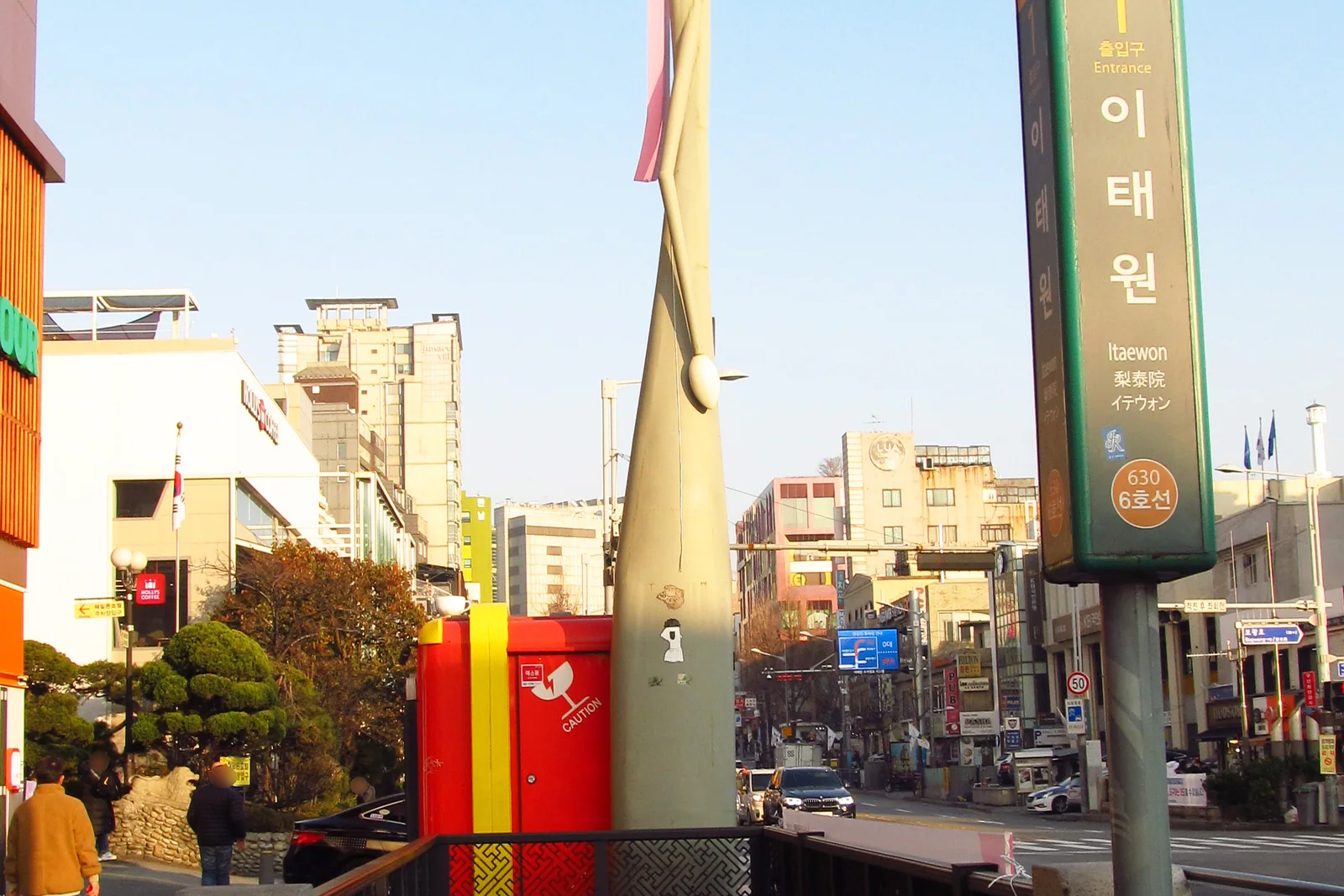
Itaewon Station sits within a neighborhood whose main road, side streets, hills, dining areas, cultural stops, and residential edges create very different walking experiences. Choose the visit's purpose before choosing the station side: a meal reservation, public cultural venue, shopping stop, or general street walk. Then identify the farthest legitimate public destination and inspect the terrain between it and the station. A pin that appears one block away can involve a steep climb or a staircase, while a slightly longer main-road approach may be easier for the group. Planning from elevation and exact address prevents the evening from beginning with an uphill mistake that must be reversed later.
Start with the farthest lawful public anchor
When the main destination lies above or beyond the central corridor, consider reaching it first and moving back toward dining, shopping, and the return station. Confirm that the address is a public visitor facility or business and check its current access directly. Do not turn a residence, workplace, hotel guest area, worship space, or drama-related private address into an attraction. If a route crosses quiet residential streets, keep the group small, voices low, and doorways clear. One established cultural institution or booked venue provides a stronger anchor than several unsourced social-media pins. If terrain or access makes the far stop unsuitable, stay on the main public corridor rather than searching for a shortcut through narrower lanes.
Verify dining needs with the individual business
Itaewon's reputation for international dining is useful context, not a guarantee that a particular allergy, religious practice, vegetarian preference, seating need, or payment method will be met. Contact the selected business when the requirement is critical and ask about ingredients, preparation, current menu, reservations, and physical access in terms the traveler can evaluate. Avoid labeling an entire street as suitable for one dietary group. Build a backup meal in the same general direction and keep enough time to change plans without crossing the neighborhood twice. A venue can change ownership or policy while the surrounding district name stays familiar, so current confirmation belongs with the business rather than an old itinerary.
Set a public meeting point before the evening crowd
For a group visit, choose a named outdoor landmark on the correct street side and a second point near the return entrance. Do this before queues, noise, or low batteries make vague messages difficult to use. Keep companions' accommodation address and a lawful road fallback available offline, and agree that nobody will enter a private building or unfamiliar vehicle simply to catch up. Travelers drinking alcohol should preserve control of payment, identification, phone, and the return journey. Crowded pavements still serve residents and businesses, so stop at the edge to check maps and leave entrances open. If someone becomes unwell or separated, reduce the itinerary immediately and move to a safe staffed public place.
Connect one cultural stop with the main-road finish
A balanced Itaewon visit can pair one independently worthwhile cultural or visitor-facing place with a meal and a short main-road walk. It should not require climbing and descending several hills to prove that the entire neighborhood was covered. Put any reserved or access-sensitive institution first, then move toward flexible commercial stops and the station. Check photography and visitor rules at each interior instead of treating a public-facing building as an unrestricted set. For a drama-themed layer, open the dedicated drama guide and include only public settings supported by current official information; the station page does not validate fan addresses. Finish while the agreed return entrance remains easy for every member of the group to find.
Recheck station access, destination rules, and the return
Use Seoul Metro for current station and facility information and Visit Seoul for official neighborhood context. A venue, restaurant, museum, or event remains responsible for its own operating and accessibility details. This guide does not freeze an exit number, business status, fare, closing time, or step-free route. Recheck the exact anchor and weather before departure, then let on-site signs and staff instructions control any changed path. A practical Itaewon pattern is purpose first, terrain second, farthest lawful public anchor third, and a simple movement back toward the main corridor. Add a verified meal and cultural stop only when they share that direction, and preserve a public meeting point plus a reliable return fallback.