Use the route below for planning, then open the linked sources for details that can change.
Use Hakrim and Taegeukdang as the two anchors
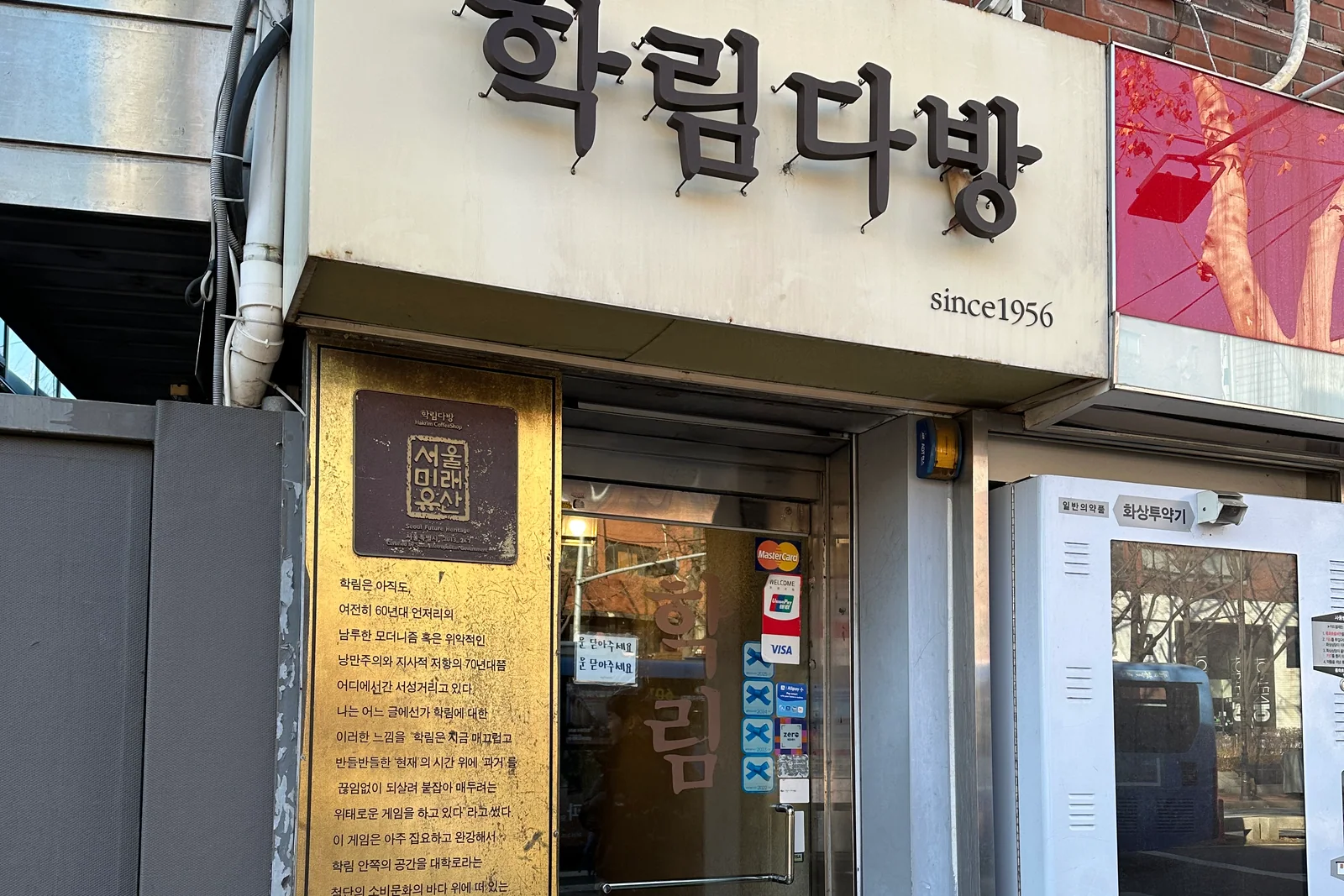
Official tourism sources connect Reply 1988 with Hakrim Dabang in Daehak-ro and Taegeukdang in Jangchung-dong. Visit Seoul describes the bakery date, while Korea Tourism Organization identifies Hakrim among the dramas filmed at the cafe. Both are operating businesses rather than preserved television sets. Check current first-party information before visiting and behave as a normal customer. The series is set in Ssangmun-dong, but that does not make every neighborhood alley or school a filming location. Keep schools, homes, and guessed character addresses out of the route, and use public cultural destinations when exploring the setting's wider nostalgia.
Build a Daehak-ro stop around Hakrim
Hakrim Dabang sits in an active theater and university district. Confirm its current status, wait policy, menu, photography rule, and customer access before relying on it. Enter for the cafe service, not to occupy a particular table or reproduce a scene. If the business is full or unavailable, continue with a public Daehak-ro theater street, park, or cultural venue rather than waiting in a doorway. Keep a short explanation of the drama relationship and let the neighborhood's present arts life carry the visit. The cafe should be one timed stop inside a walkable district, not the meeting point for a large fan group.
Make Taegeukdang part of a Jangchung walk
Visit Seoul identifies Taegeukdang as the bakery used for a date in the series. The business has changed since filming and controls its products, seating, queues, and photography. Choose a purchase only after checking current information and do not promise the former interior or a specific pastry. A useful route pairs the bakery with ordinary public stops in the Jangchung area and ends near a known transport connection. It should not be joined to Hakrim on foot merely because both are old Seoul businesses. If time is short, choose the cluster that best fits the day's other reservations.
Treat Ssangmun as story context, not a house hunt
Visit Seoul's older neighborhood feature explains the drama's Ssangmun setting and offers public cultural context, but it also contains assumptions and business details that may no longer be current. Do not turn school routes, snack bars, residential alleys, or private façades into a filming-location checklist. A traveler can visit a public museum, riverside path, or signed neighborhood destination without claiming that a character lived there. Keep groups small, leave doors and windows out of photographs, and follow current signs. The route's two filming anchors remain Hakrim and Taegeukdang because official sources make their screen relationships explicit.
Explain Seoul nostalgia without copying the series
The travel angle is how long-running businesses and public neighborhoods connect past and present Seoul. It does not require episode summaries, dialogue, music, stills, posters, or screenshots. Mention only enough scene context to distinguish each business, then describe the practical choice between Daehak-ro and Jangchung. Do not stage queues, block service, or photograph staff and customers without permission. Interiors, packaging, signs, and furniture can change. A licensed photograph of the real cafe or neighborhood should be labeled as today's place, not as a recreation of the television image. This makes the guide respectful and useful to readers unfamiliar with every episode.
Verify both businesses on the visit date
Use Visit Seoul and KTO to establish the filming relationships, then use each business's current channel for access. Recheck closure notices, customer rules, reservations, menus, queues, and photography before setting out. Never preserve old hours or prices from a tourism article as live facts. Choose Hakrim for a Daehak-ro cultural day or Taegeukdang for a Jangchung route, and keep a nearby public fallback. If either business no longer welcomes ordinary visits, remove it instead of substituting a private address. Official tourism evidence does not guarantee that a commercial location will operate forever or retain the same interior.