Use the route below for planning, then open the linked sources for details that can change.
Use a named entrance, not the word Gwanghwamun
Gwanghwamun can mean the subway station, the gate of Gyeongbokgung Palace, the long civic square, or the surrounding office district. Those targets share a central map but require different entrances and crossing decisions. Save the first destination in Korean: a square landmark, palace gate, museum entrance, government building, or meeting point. Gwanghwamun Station is on Seoul Subway Line 5, while nearby central stations may suit a different end of the route. The city identifies Gwanghwamun Square as a major public space in front of Gyeongbokgung, but an event can change normal pedestrian movement. Resolve the exact public place before following the largest flow out of the concourse.
Assume a major civic event can rewrite the approach
Gwanghwamun Square hosts public programs and large assemblies that can bring barriers, road closures, bus detours, security screening, and temporary station controls. Seoul's March 2026 event guidance demonstrated that nearby trains may even bypass stations when safety operations require it. That was event-specific, not a permanent rule, but it shows why an old exit recommendation is unreliable. On the visit date, check Seoul Metropolitan Government announcements, the named organizer, and Seoul Metro service notices. Follow police and staff directions without entering a closed roadway or trying to reach the photographed angle. Choose a second central station and a lawful surface route as the backup when the primary approach is restricted.
Treat the palace as a separate admission decision
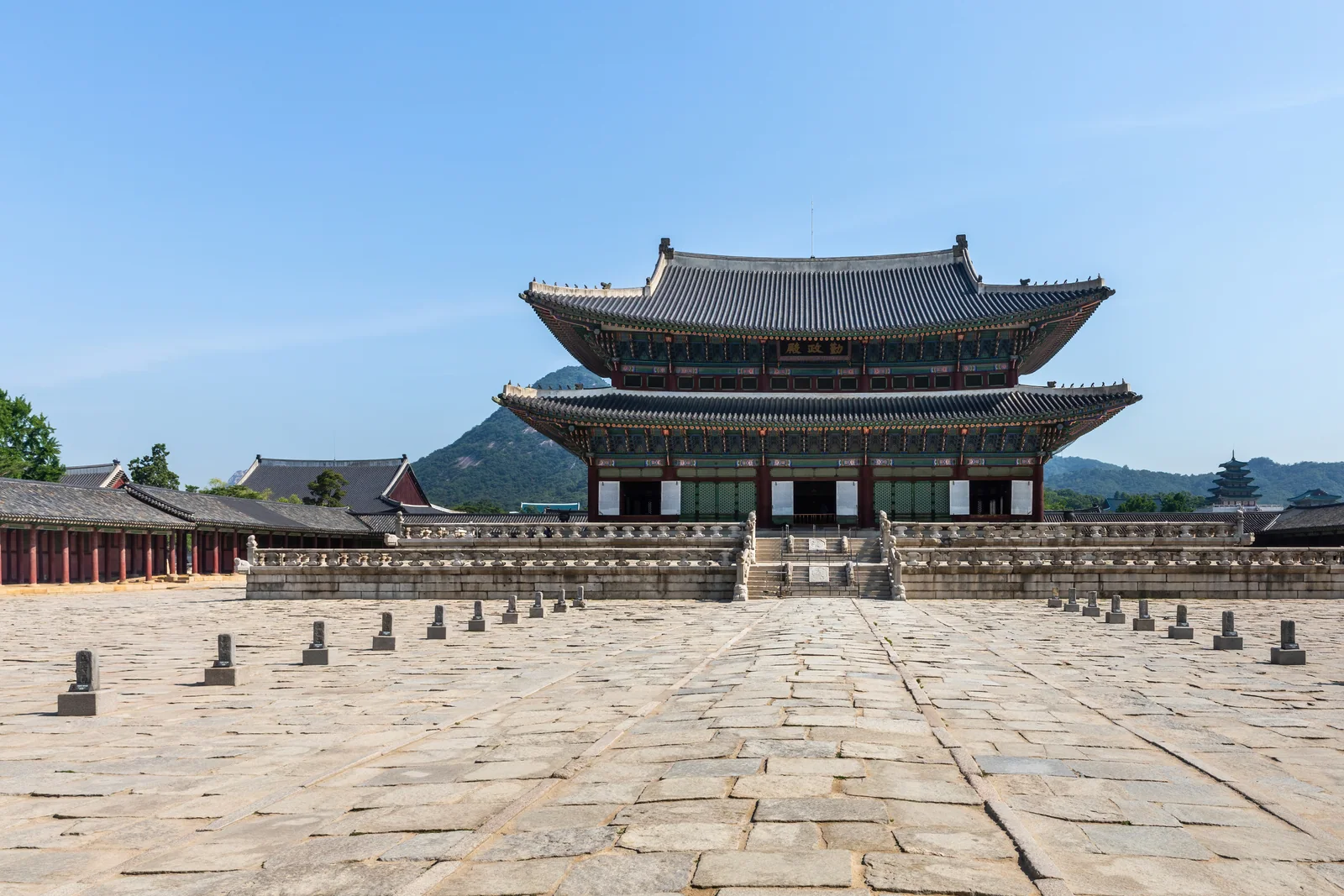
Seeing Gwanghwamun Gate from the square does not mean Gyeongbokgung is open or that every palace program is available. The Royal Palaces and Tombs Center publishes the current site notice, visitor guidelines, regular closure pattern, and special operations. Check the exact palace and date before building the day, and save its lawful visitor entrance rather than a pin at the center of the grounds. Security, ceremonies, weather, or maintenance can affect access. If the palace is unavailable, keep the square, a confirmed museum, or Cheonggyecheon as the central fallback instead of racing to another royal site. Admission and photography rules inside a heritage site override general tourism descriptions.
Walk north or south once, not repeatedly
A practical civic-center route begins at one anchor and continues in one direction. A northbound plan can move from the lower square toward the statues, Gwanghwamun Gate, and a confirmed palace or museum entrance. A southbound plan can finish toward Cheonggyecheon, Jonggak, or City Hall depending on the next reservation. Do not weave across Sejong-daero for every saved landmark. Large junctions and event fencing make a short straight-line distance deceptive, especially with children or limited mobility. Place food and rest on the chosen side, and remove the farthest optional stop before the return. The route should end near a known station entrance rather than at an arbitrary midpoint on the square.
Respect working institutions around the visitor space
The district includes government offices, diplomatic facilities, media buildings, workplaces, schools, places of worship, and active roads alongside attractions. A publicly visible façade is not permission to enter, photograph security operations, or wait in a doorway. Use only posted visitor entrances and follow bag screening or identification instructions at an institution. Demonstrations and official ceremonies deserve distance rather than tourist participation for a photograph. When a building does not clearly welcome walk-in visitors, keep it as exterior context and continue to the prepared public museum or square landmark. Groups checking maps should move to the edge of the pavement so commuter and accessibility routes remain clear.
Match each changing fact to its authority
Seoul Metro is authoritative for rail service, Seoul Metropolitan Government for square and city-event guidance, the Royal Palaces and Tombs Center for palace admission, and each museum or organizer for its own entrance. Recheck the sources close to travel and trust current barriers and staff over a saved map. Confirm today's exit, closures, event access, and walking conditions. Choose the first public place, inspect any civic controls, confirm heritage admission separately, walk the district in one direction, and retain a nearby indoor alternative. This keeps the day workable when a rally, ceremony, maintenance project, or severe-weather notice changes the surface route.