Use the route below for planning, then open the linked sources for details that can change.
Build from the locations verified by VISITKOREA
The Korea Tourism Organization's official True Beauty feature verifies a broad Bukchon filming area and N Seoul Tower as usable Seoul anchors. That evidence creates a much smaller and safer route than the long lists copied across fan maps. Begin near Anguk for the public-street layer around Bukchon, then decide whether the separate Namsan visit fits the same day. Do not treat every picturesque alley, school, house, café, or shop in the area as a filming location. The route should remain worthwhile as an ordinary heritage walk and city viewpoint visit even when a storefront has changed or a specific filming angle is no longer appropriate to approach.
Verify each drama-to-place relationship
Use the VISITKOREA feature to confirm the drama relationship, but do not confuse a historical filming reference with current visitor access. Check the exact public place and the date of the source before adding it to your plan. Then look at current tourism or venue information because a business name, tenant, entrance rule, or neighborhood request can change while the filming fact remains historically true. Screenshot comparisons, copied lists, and popular map pins are not enough to justify another stop. If an official source does not confirm the relationship, leave the candidate out. This prevents a similar-looking doorway from becoming an intrusive or misleading destination.
Keep the Bukchon layer on respectful public routes
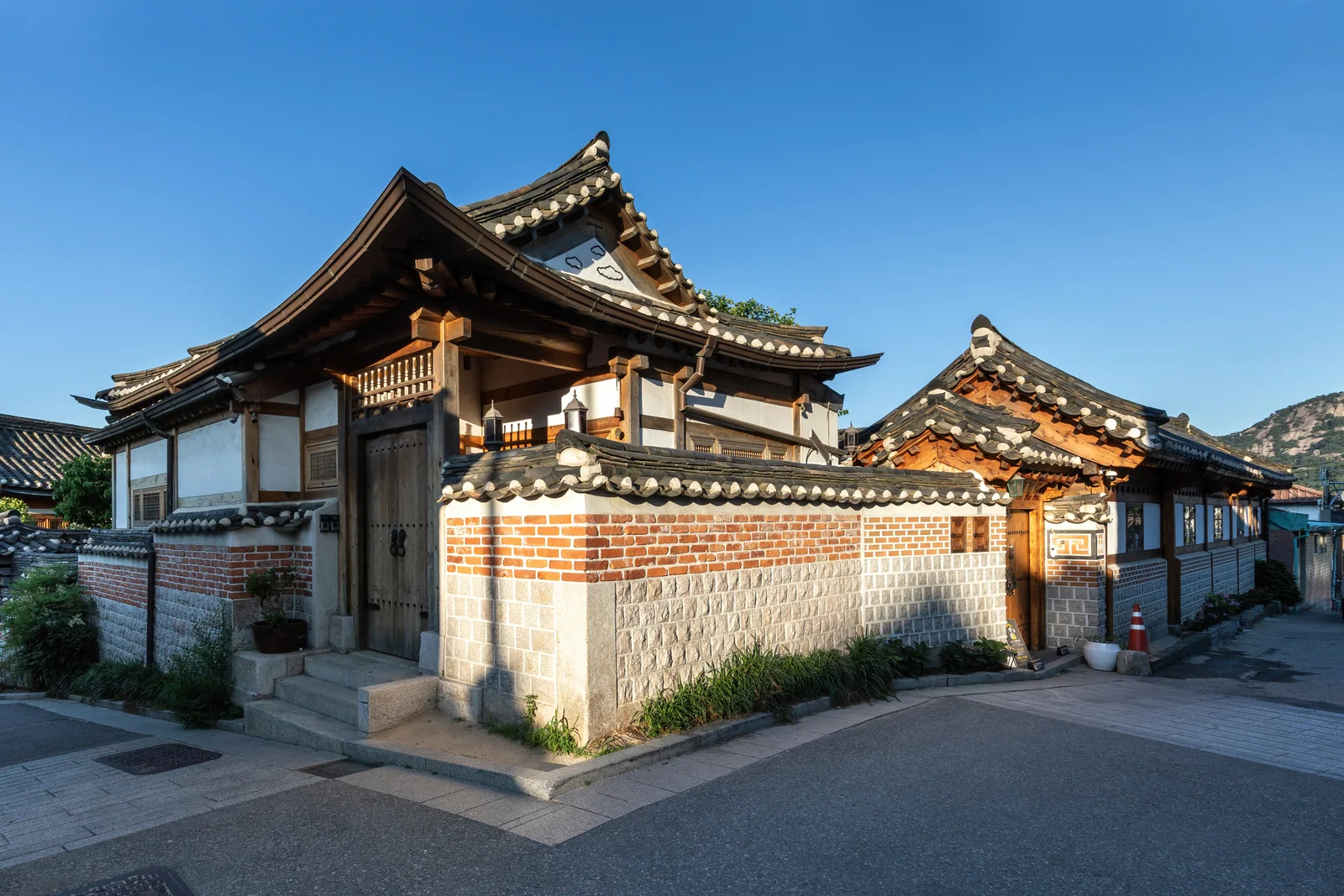
Use Anguk and current official visitor guidance to approach the Bukchon area, then remain on lawful public streets and designated visitor routes. The district includes homes, schools, working businesses, slopes, and narrow passages, so a filming relationship never grants access to a gate, courtyard, classroom, rooftop, or interior. Skip any stop that requires blocking a doorway or photographing residents. Historic articles may describe a shop or gallery that has since changed, and that old description is not permission to enter the current premises. Keep voices low, follow posted restrictions, and let the public street and hanok landscape carry the route instead of pursuing an exact camera angle.
Choose Bukchon first and Namsan only as a second cluster
Make the Anguk and Bukchon walk the primary cluster, combining it only with independently verified heritage or cultural places that continue the same direction. If time, weather, and mobility allow, treat N Seoul Tower as a separate second cluster and use current Seoul transport and tower access information for the transition. Do not insert the Namhae locations from the official feature into a Seoul day; they belong to a different regional trip. A compact route can finish in central Seoul near a practical return connection, while an ambitious version can add Namsan after a rest. This geography-first structure is clearer than arranging stops in episode order and remains useful when one historical storefront is unavailable.
Separate travel context from protected media
Use your own destination photos or images that are clearly licensed for reuse. Broadcast stills, promotional portraits, dialogue, scripts, and long scene summaries may be protected material and are not needed to plan the trip. A short factual note can explain why a confirmed place matters, while practical details such as public access, neighborhood context, route order, and considerate behavior deserve most of the attention. Do not block paths or stage an unsafe reenactment for a photograph. Each stop should still be worth visiting even without recreating a scene.
Recheck Bukchon and Namsan before leaving
Before leaving, reopen the official VISITKOREA feature, current Bukchon visitor guidance, N Seoul Tower access information, and the transport source for your route. Confirm that each place still matches the saved address and that photography or neighborhood restrictions have not changed. Skip any storefront or entrance whose current use is unclear. Keep Bukchon and Namsan as separate clusters when time, weather, or mobility make the transfer impractical, and rely on current official information instead of an old route screenshot.