Use the route below for planning, then open the linked sources for details that can change.
Treat Suwon Station as the gateway, not the attraction
Suwon Station completes the intercity or metropolitan rail leg, but the city's main fortress, palace, heritage streets, markets, and drama-interest stops are not all waiting outside one exit. Begin with one public heritage anchor and use Visit Suwon's current transport guidance to connect the station to that area. Save the attraction entrance or information point in Korean rather than a broad Suwon Hwaseong map pin. A day trip becomes much easier when the station transfer and the walking loop are designed as separate layers. Travelers who treat rail arrival as the start of an immediate walk can lose time around commercial blocks before discovering that the intended historic area requires another local connection.
Confirm the rail product and return window
Use KORAIL or the relevant current operator to confirm the actual train, departure station, ticket conditions, and return journey. A rail reservation and an ordinary metropolitan transit journey are different products even when both reach Suwon Station. Keep the booking record available offline and verify the departure station name, because Seoul has several intercity gateways and a remembered city label is not enough. Choose the return window before filling the afternoon with optional stops, and preserve margin for the local journey back to Suwon Station. If the outbound train is delayed, remove the least important attraction rather than compressing the fortress walk and risking the reserved return.
Resolve the local connection to the Hwaseong area
Open Visit Suwon's current transportation information and identify the local route from Suwon Station to the chosen public entrance or heritage anchor. Confirm the direction, stop, and final walk on the travel date instead of copying a bus number from an old blog. A taxi or road option also needs the exact destination, not simply Hwaseong. Keep the Korean place name visible and check where the group will begin the walking loop. If luggage accompanies the day trip, decide its handling before leaving the station; do not assume a locker size or vacancy. The local connection should end where the itinerary can proceed in one direction, not wherever a map happens to place the center of the fortress perimeter.
Choose a manageable section of the heritage landscape
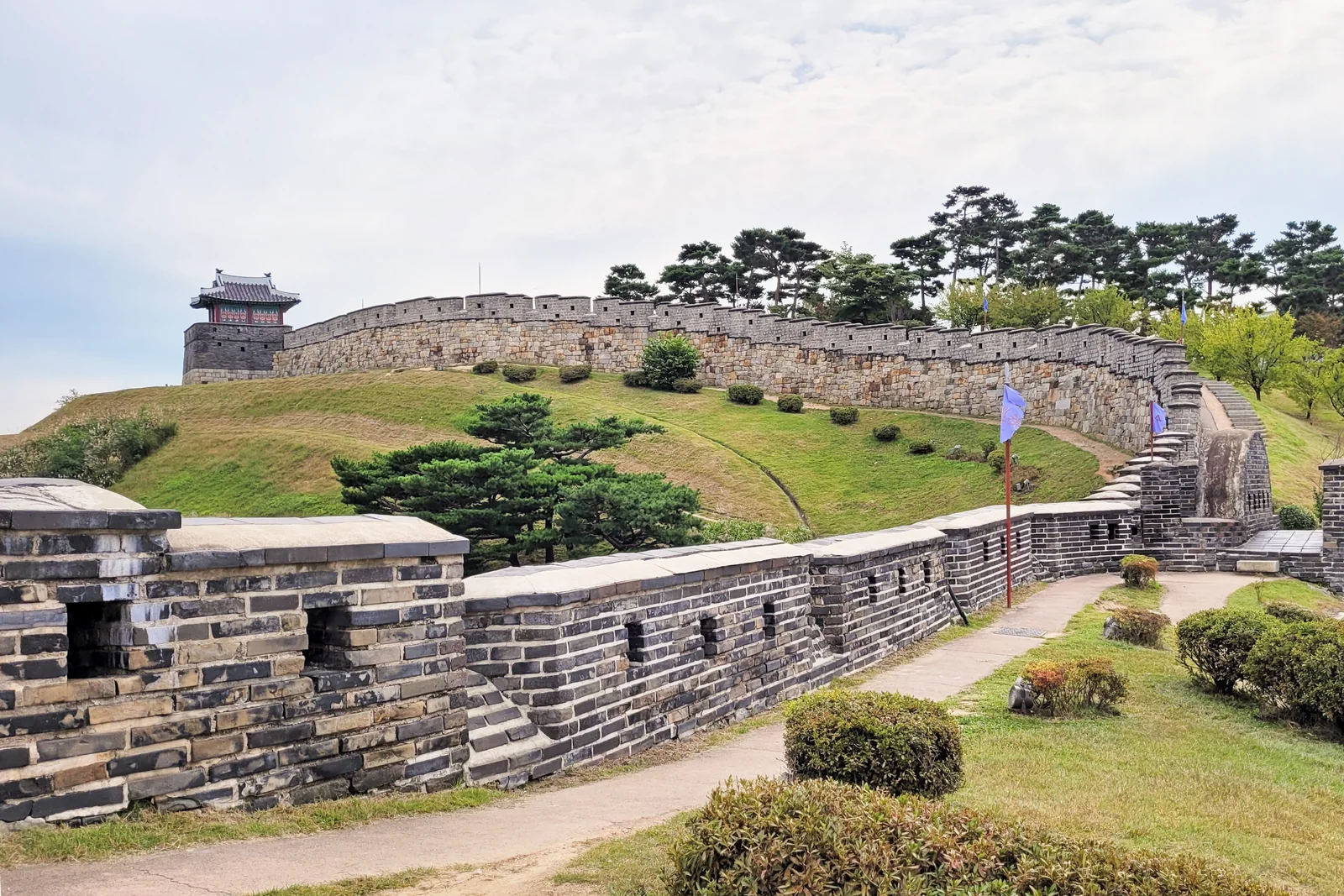
Suwon Hwaseong covers a substantial urban landscape with gates, walls, palace grounds, slopes, and ordinary city streets. Use the official recommended-course material as a starting point, then shorten it for the group's mobility, weather, opening notices, and personal priorities. Put any ticketed or controlled site first and keep viewpoints or longer wall sections optional. A complete circuit is not required for a meaningful visit. Check the surface and gradient before committing a stroller, wheelchair, or tired traveler to an elevated section, and keep a lower urban route as the fallback. When conditions change, remain within the same heritage area rather than replacing one missed stop with a distant attraction across Suwon.
Add food or drama context without breaking the route
Place a market, meal, café, or verified filming-location layer along the selected heritage direction. Confirm dietary requirements and business details directly, since an established market area cannot guarantee a particular vendor or ingredient. A drama stop belongs only when an accountable source supports the relationship, current public access is appropriate, and the location fits the same Suwon cluster. Do not divert toward a residence or school because a fan map is popular, and do not combine Seoul and Suwon filming pins as though they form one walk. Heritage remains the practical anchor; food and screen context should enrich the day without adding another cross-city transfer or creating pressure on ordinary neighborhood use.
Recheck the city route and protect the station return
Use Visit Suwon for current destination, course, and local transport information, and the rail operator for the intercity or metropolitan journey. On-site heritage notices and staff instructions control access to individual facilities. We leave out fixed bus numbers, fares, opening hours, and train times. Before leaving the historic area, calculate the return from the group's actual last stop to Suwon Station and preserve a road fallback. A practical approach is rail product, local gateway connection, one manageable heritage course, optional food or verified drama context, and a protected return. A shorter route completed with margin is more useful than a full checklist followed by a rushed journey back to the platform.