Use the route below for planning, then open the linked sources for details that can change.
Separate the market visit from the black-pork meal
Dongmun Market and a black-pork dining area can form a useful Jeju City route, but they solve different travel needs. The market supports browsing, small tastings, produce and seafood context, while the pork meal requires a seated order and enough time to cook and eat safely. Choose which is the priority before arrival. Travelers coming directly from Jeju Airport should settle luggage before buying food, and travelers continuing to Seogwipo or Jungmun should avoid adding perishables to a long unrefrigerated transfer. Save the official market and Black Pork Street destination information, the hotel address, and the next transport point. If weather, baggage, or a delayed arrival reduces the available energy, complete only the priority and keep the other for a separate city visit.
Browse Dongmun before choosing tastings or takeaways
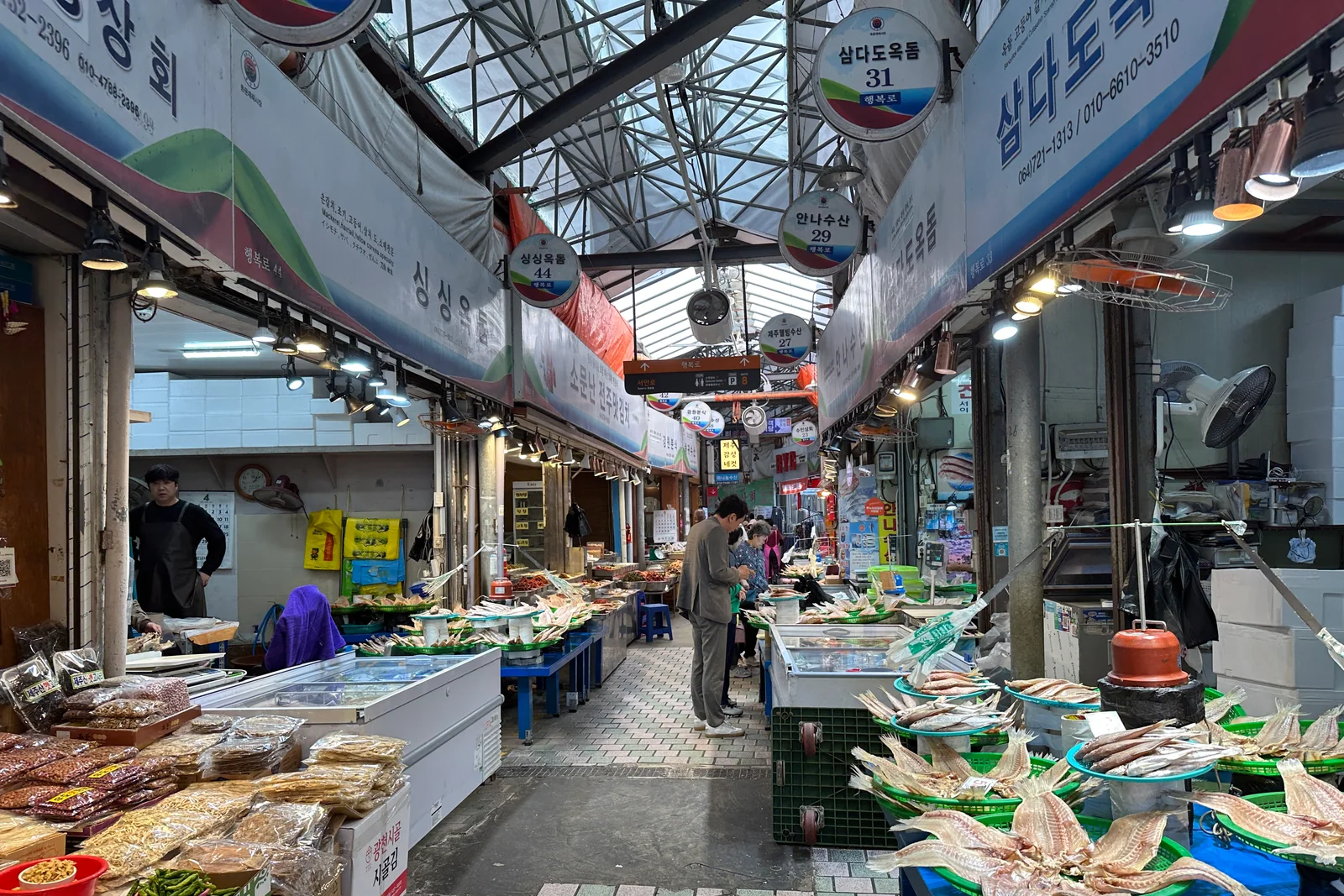
Walk a defined market section before purchasing and distinguish ready-to-eat food from raw seafood, refrigerated products, packaged goods, and items intended for later preparation. Ask whether a purchase can be eaten immediately, how it should be stored, and whether the accommodation permits cooking or refrigeration. Choose one tasting at a time and use the seller's designated eating and disposal area. Do not carry uncovered food through working aisles or touch produce and seafood without invitation. Market sellers, programs, and product availability change, so use the official Dongmun pages for destination context and current notices rather than following a fixed influencer route. A responsible market visit can include observation, a packaged souvenir, or no purchase at all when luggage and food storage are unsuitable.
Decide whether a raw-fish tasting fits the group
A fish market display does not answer every question about species, preparation, shellfish contact, refrigeration, or who the product suits. Confirm what is being purchased, whether it is raw or cooked, where it will be prepared, and how soon it should be consumed. Travelers who avoid raw food, fish, shellfish, or shared preparation areas should explain that requirement before ordering and ask whether knives, boards, tanks, fryers, or serving spaces are shared. When handling, storage, or preparation is unclear, do not rely on smell, appearance, or another customer's order. Select a thoroughly cooked item from a seller able to explain it, or skip the seafood tasting.
Plan black pork as a full meal with safe grilling
Treat the black-pork stop as the substantial meal rather than another sample. Confirm the cut, portion structure, side dishes, cooking responsibility, and ordering method before committing. At tabletop grills, follow staff instructions, keep raw-meat tongs and scissors separate from utensils used for cooked food, and allow the pork to cook thoroughly. Ask staff for help when the grill, doneness, ventilation, or changing plate is unclear. Side dishes and sauces can contain seafood, soy, wheat, sesame, egg, or other ingredients not obvious from appearance. A street or district name does not guarantee that every restaurant uses the same sourcing, menu, or service. Choose a current business that can explain the order and maintain a nearby backup rather than making one photographed storefront essential to the entire Jeju City plan.
Check dietary fit and payment before food preparation
Black pork is not suitable for travelers who avoid pork, and removing visible meat cannot make pork stock, shared grills, or side dishes compatible with every dietary practice. Vegetarian, vegan, halal, kosher, allergy-sensitive, and medically restricted travelers should identify a different meal unless a business can clearly meet their requirements. A tourism destination listing is not certification. At both the market and restaurant, ask questions before food is cut, cooked, or plated. Payment acceptance may differ by seller, so keep a practical backup and review the total before completing a transaction. Do not assume a transit card, foreign mobile wallet, or one bank card covers every purchase. Keep receipts when provided, protect card details, and avoid buying more refrigerated or raw food than can be stored and transported safely.
Recheck the market, meal, and onward transport separately
Use the official Dongmun Market and fish-market pages for destination and visitor context, and the official Black Pork Street reference for the dining district. Individual sellers and restaurants control current menus, ingredients, preparation, operating status, packaging, and payment acceptance. This page therefore contains no vendor ranking, fixed price, business hour, permanent product list, or promise that a particular dish is available. Before leaving the market, confirm that every purchase can survive the next journey. Before leaving the restaurant, reopen the hotel or airport route rather than assuming a saved arrival path works in reverse. A practical Jeju City sequence is luggage first, one market scan, a conservative seafood decision, one properly cooked meal, explicit dietary checks, and food storage that matches the actual onward trip.