Use the route below for planning, then open the linked sources for details that can change.
Make one soup meal the purpose of the Seomyeon route
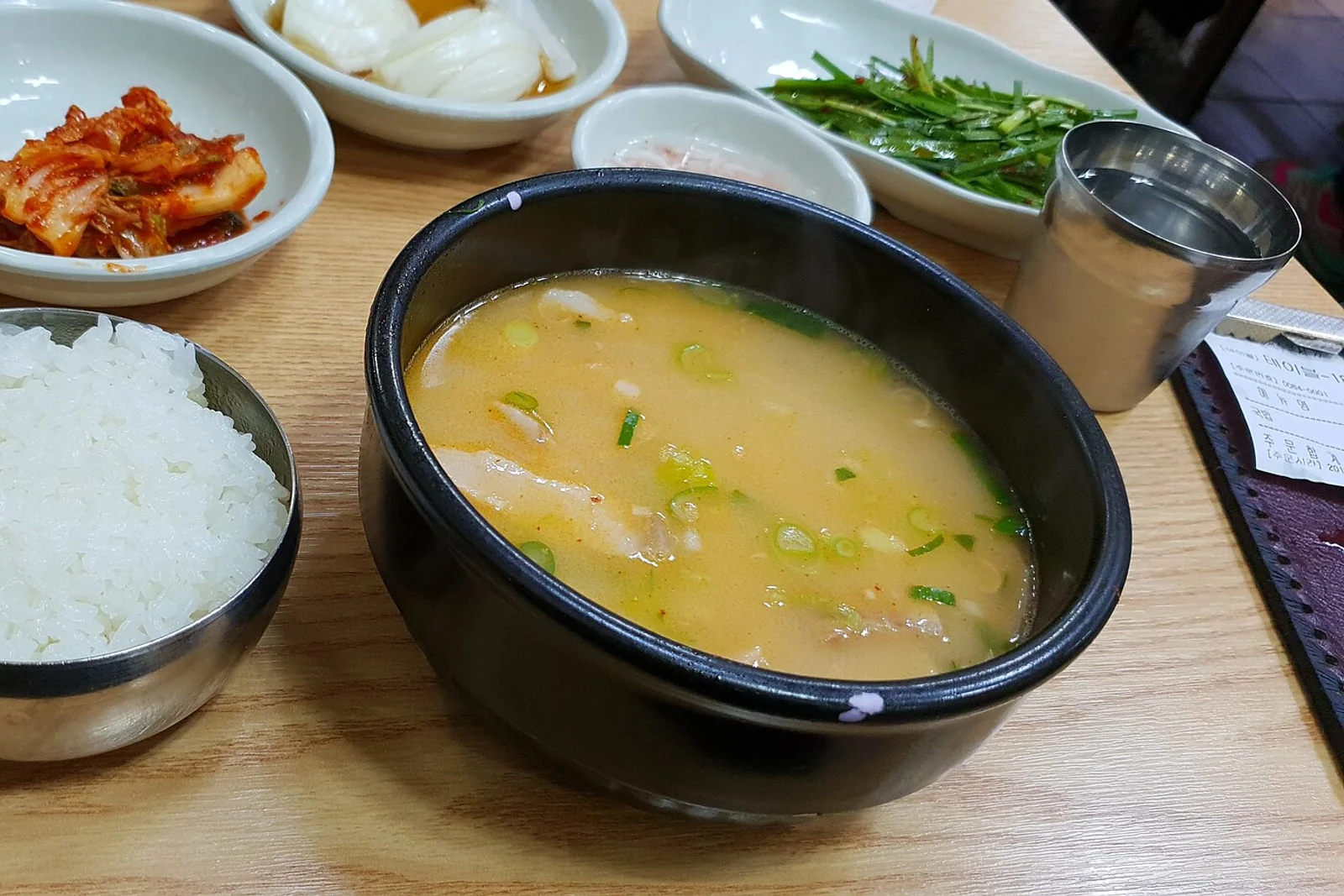
A useful Seomyeon food route does not need a long list of restaurants. Its purpose is to understand dwaeji gukbap as a Busan meal, choose a version that fits the traveler, and leave with an easy onward route. Begin with the official Busan food reference and Seomyeon Market context, then identify a small public dining zone rather than one irreplaceable storefront. Check the live status of the intended business on the visit date and save another suitable option nearby. Decide whether the meal follows an airport or rail arrival, sits inside a broader Seomyeon visit, or ends the day. Heavy luggage, fatigue, and a later reservation should change the restaurant choice and walking boundary. The soup is the anchor; shopping, cafés, and additional snacks remain optional.
Choose the bowl and taste before adding seasonings
Dwaeji gukbap generally joins pork, broth, and rice, but restaurants can differ in cuts, offal options, rice placement, seasoning, garnish, and side dishes. Confirm the menu item before ordering and ask whether rice arrives inside the soup or separately when that affects preference. When the bowl arrives, taste the broth before adding salted shrimp, spicy seasoning, chives, or other table condiments. Add small amounts and keep shared utensils in the dishes provided for them. A photograph from another restaurant does not establish what the current bowl contains. Travelers who dislike offal or particular textures should communicate that before the order rather than removing ingredients afterward. If the menu or explanation remains unclear, select the simplest clearly described pork soup instead of guessing from a neighboring table.
Use Seomyeon Market as context, not a compulsory crawl
The market area helps explain why a focused meal can sit within a busy commercial district, but the route does not require purchasing from every visible food business. Walk the selected lane, confirm the restaurant entrance and queue arrangement, and note a lawful meeting point before the group separates. Do not block market circulation while reading menus or photographing a storefront. After the soup, decide whether a simple beverage or packaged snack adds value; avoid stacking another full meal simply because it appears on a checklist. Weather and crowding can make a short indoor route preferable. If the intended dining area is closed or inaccessible, use the market reference to remain within Seomyeon and choose a reviewed backup rather than traveling across Busan while hungry. Geographic flexibility is more durable than brand dependence.
State pork, broth, and cross-contact boundaries clearly
Dwaeji gukbap is a pork-centered dish and should not be presented as adaptable to every diet. Removing visible meat does not remove pork from the broth, and seafood-based seasoning, fermented products, wheat, soy, egg, sesame, or shared preparation may also matter. Vegetarian, vegan, halal, kosher, allergy-sensitive, or medically restricted travelers should choose a different meal unless a business can clearly satisfy the individual requirement; a neighborhood or tourism listing is not certification. Show a translated requirement before ordering and be prepared to leave when the answer is uncertain. Hot soup can also spill easily in tight seating, so place bags away from aisles, supervise children, and let staff handle serving vessels. Personal dietary safety has priority over completing a famous-dish itinerary.
Handle the order, payment, and pace as separate steps
First confirm the dish and any optional additions, then identify whether ordering and payment happen at the table, a counter, or a machine. Payment acceptance varies, so carry a backup and do not assume that a foreign card or mobile wallet will work everywhere. Review the displayed total before paying and keep the receipt when available. Soup, rice, side dishes, and condiments can make a more substantial meal than a photograph suggests. Order conservatively, finish the main bowl before considering extras, and avoid wasting communal side dishes. If several travelers want different cuts or spice levels, prepare the translated choices before staff arrive. The group should leave only after checking belongings and the next transport direction; a rushed payment dispute or forgotten bag can undo the simplicity that made Seomyeon a useful meal stop.
Recheck both the food destination and Busan transport
Use the official Busan dwaeji gukbap reference for cultural and destination context, the Seomyeon Market page for the district layer, and Visit Busan transport guidance for the current journey. The individual restaurant remains authoritative for menu, ingredients, ordering, operating status, queue procedure, and payment. This page therefore avoids a restaurant ranking, fixed price, serving hour, permanent menu, and claim that one bowl represents every Seomyeon kitchen. Recheck the business before departure and select the station exit or road approach from its exact address. Travelers coming from Gimhae Airport or Busan Station should plan those transfers separately. A practical route is one district, one soup decision, one dietary check, a backup payment method, and a confirmed way onward after the meal.